How to fit a spa therapist’s tunic at the treatment bed
Use a towel, an empty treatment bed and the usual stool to compare tunic samples and give your supplier a precise account of what needs to change.
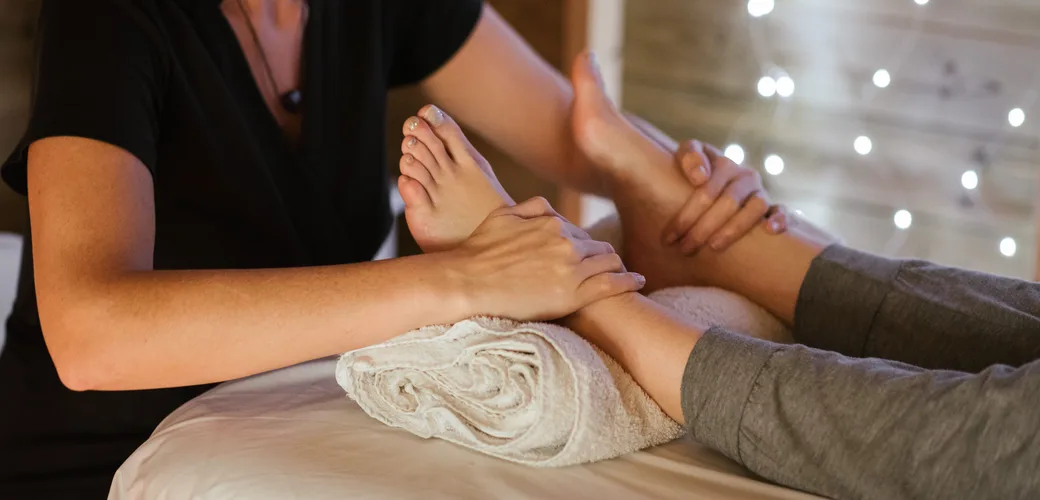
- Watch what the tunic does when the wearer lowers their arms as well as when they reach.
- Check the hem and side vents with the trousers and stool used in the treatment room.
- Tell the supplier which edge moved, during which task, and whether the wearer had to put it back.
A spa therapist’s tunic can look right at the fitting room mirror and still need straightening every time its wearer gets off a stool. Before choosing between samples, take them into an empty treatment room. Ask the person who will wear the tunic to lay out a towel, take their usual seat and stand up again. The useful question is what they have to do to their clothing before they can start the next task.
What can you learn before ordering a sample?
Look at the photograph and technical description together. The Mia spa tunic specification, for example, describes a wrap style with three-quarter sleeves and side vents. Those details tell you which parts to watch. They cannot tell you where the cuff will land on your colleague’s arm or whether the front will sit flat when that person takes a seat. A vent gives the hem somewhere to open. It tells you little about room across the back.
Request the size chart for the exact style and ask whether the measurements refer to the garment or the person. Choose a starting size from that information. If the main decision is between two cuts, identify each sample by its model and size before it goes into the room. Use the same work trousers and usual layer underneath. Otherwise a change of waistband or a thicker top can leave you comparing two outfits when you meant to compare two tunics.
At the bed, watch the return as well as the reach
Set the bed at the height the therapist normally uses for preparing it. Give them a folded towel and ask them to open it and smooth it into place the way they ordinarily would. Leave the far corner to someone on the other side if that is the usual way of making up the bed. There is nothing to learn from making the wearer reach further than the job requires.
Stand to one side with the wearer’s permission. Follow the sleeve edge as the hand moves forward, then watch the front of the tunic as the arm comes down. Did the wearer move the cuff out of the way first? Did the neckline return to its resting position by itself? Ask which detail they actually noticed. A fold across the back in motion is a poor reason to discard a sample if it disappears at rest and the person can carry on working comfortably.
What changes on the stool?
Have the therapist sit where they usually work, with the same trousers they wore at the bed. Look at the tunic from the side. A slit can open as the hips bend and close again when the wearer stands. The more useful observation is whether one end stays caught on the waistband or the person has to pull fabric out from underneath them. Check the front fastening while seated, too. A wrap front can look quite different from this angle than it did standing in front of the mirror.
Change one thing for the next comparison. If the shoulder felt tight but the hem sat well, ask to try another cut with more room across the upper back. Simply going up a size also changes the neckline and the length of the sleeve. Equally, if the only interruption was a hem caught under the wearer, a different hem length is a more focused comparison than switching every feature at once.
What should go back to the supplier?
Record the task, the part of the garment that moved, and what the wearer did next. “After standing up from the stool, I had to free the left front edge from my waistband” gives a supplier something to investigate. “Too small” invites a larger sample without explaining the problem. Include the sample reference and trousers worn. If a colleague in another size will use the same design, have them repeat the relevant movement before placing the team order.
Keep this treatment room note with the guide to planning uniforms across a wellness studio. Reception and treatment staff may share a colour, yet only one of those roles spends much of the appointment beside a treatment bed. If you are preparing a custom uniforms brief, attach the wearer’s own sentence. It explains what the next sample needs to do better, even to someone who was never in the room.
Related reading
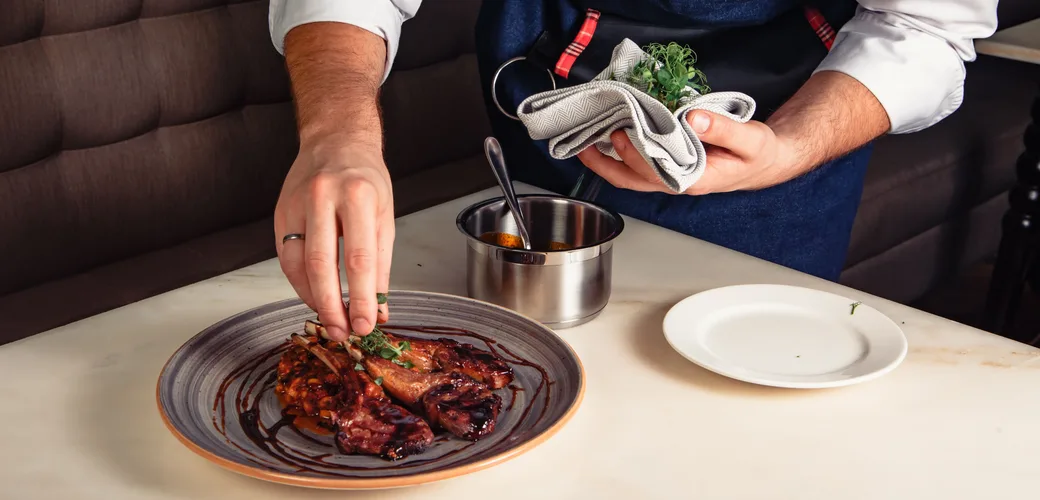
Chef jacket or shirt for an open kitchen?
Compare two garments at the restaurant pass with the same apron and an empty plate to see which details matter to the cook and which the guest can see.
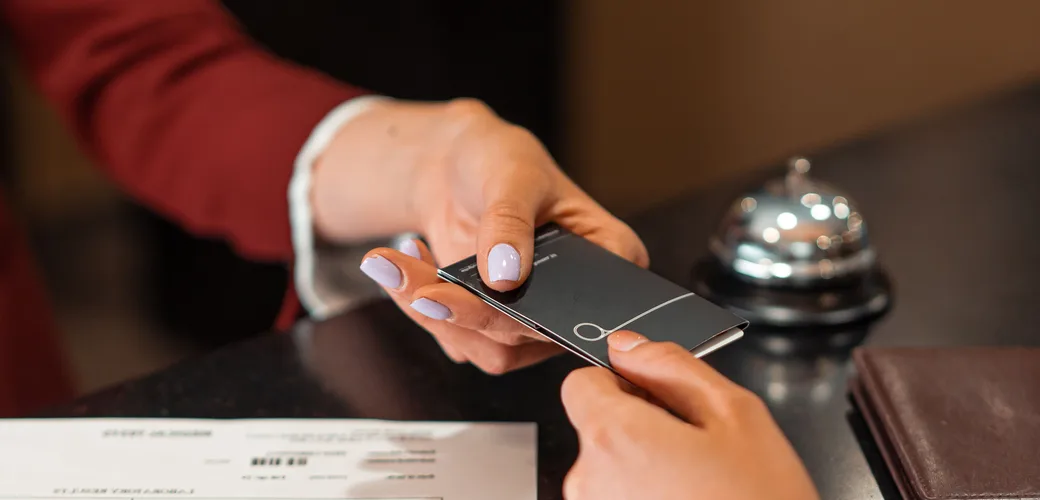
Hotel reception uniforms for seated work
Check the jacket, waistband and name badge at the reception desk while a colleague sits, turns to the printer and hands a guest their room key.

Restaurant uniforms for new starters
Bring a new starter into an existing restaurant wardrobe. Check the garment reference, available pieces and the difference between a repeat order and a change.
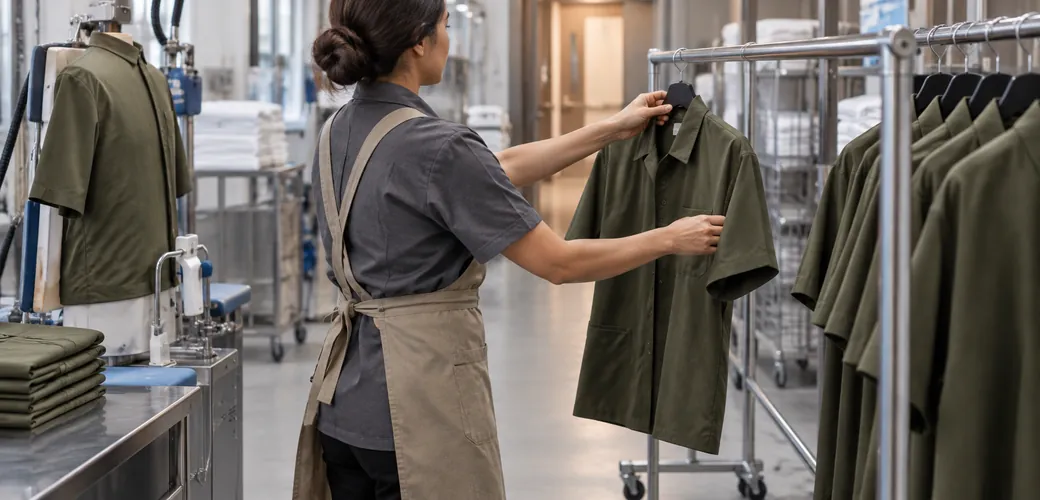
Hotel uniform laundry requirements
Map collection, sorting, washing, drying, finishing and return so hotel, laundry and supplier can approve one compatible uniform process.
Hotel uniform durability diagnosis
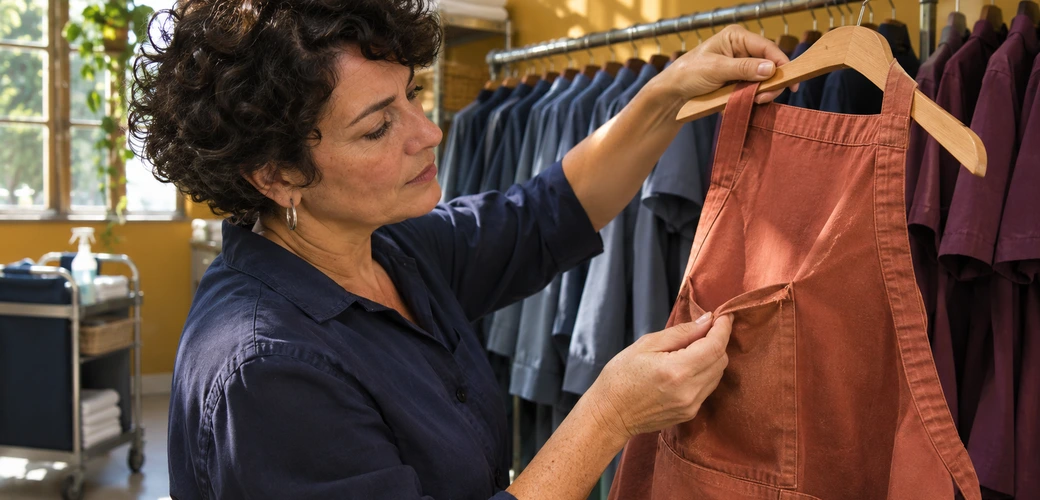
Record where hotel uniforms wear out and decide whether to repair, reorder or review the design. Includes a practical decision example.
How to compare hotel uniform fabric samples
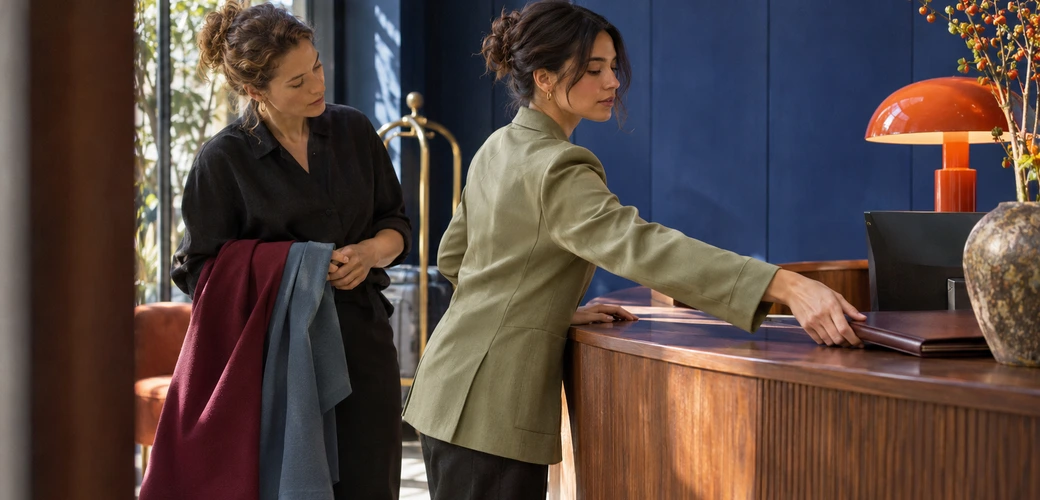
A method for comparing hotel uniform fabric samples by role, from a coded swatch review to a practical check on the finished garment.