Chef jacket or shirt: what makes the difference at the pass?
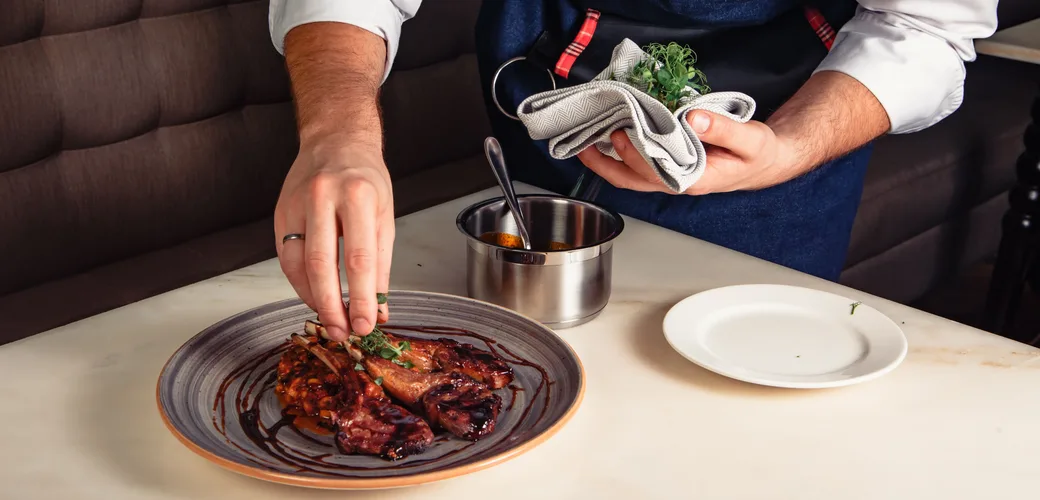
Compare two garments at the restaurant pass with the same apron and an empty plate to see which details matter to the cook and which the guest can see.
- Ask the kitchen lead which garments are acceptable at the station before ordering samples.
- Compare the sleeve on the hand that reaches furthest across the pass.
- Record the exact garment and apron together so the next fitting answers the same question.
A chef jacket and a chef shirt can look almost identical across an open kitchen once the cook ties on a bib apron. Choose between them from the cook’s side of the pass first. Of the garments the kitchen lead accepts for that station, which lets the wearer finish and hand over a plate without having to move a cuff or straighten the apron? Let the view from the dining room settle a genuine tie.
What are you actually buying when you order a chef shirt?
Ask for a drawing or a clear photograph of the fastening, collar and sleeve end before calling in a sample. A catalogue name tells you surprisingly little about those details. Chef Works’ specification for its SHC08 seersucker shirt describes a band collar, a press-stud front and a tab on the back of the collar for an apron. The manufacturer presents it for service staff. It illustrates why a shirt can have details you might associate with a jacket. Its specification does not establish its suitability for your cooking station.
Write the job on the sample request. “Plates cold starters, calls the order and passes the dish to a server over a deep counter” gives the supplier more to go on than “guest-facing”. Add the apron model and ask which sleeve options are available in the cut you want to try. If colleagues rotate between this pass and a different station, ask the kitchen lead whether the same outfit is permitted at both. Resolve that before asking the team which colour they prefer.
Where does the sleeve finish when the plate leaves the pass?
Arrange the comparison before service, with a clear counter, an empty plate and the apron the team actually wears. Have the same cook try both garments in a size that fits each cut. Fasten the cuffs and tie the apron as they would for work. A jacket tested with rolled sleeves against a shirt tested with closed cuffs answers a different question. If both ways of wearing a garment are permitted, record which one you are assessing.
Place the plate where the cook would normally garnish it. Ask a colleague to receive it from their usual position. Watch the working wrist as the cook reaches to the far edge and releases the plate. Did the cuff move towards the rim? Did the cook change hands or interrupt the handover to push it back? Ask what they felt across the shoulders. A sleeve that looks short only because the back pulls tight deserves another fitting before you order a longer sleeve.
Repeat the movement with the other sample. If only one cuff stays clear and the wearer can complete the handover comfortably, you have a reason to prefer that cut. If neither works, request a different sleeve or cut. Going up a size can change the body as well, so check both again. This is a comparison you can carry out in your restaurant. It is not evidence of heat protection or a substitute for the station’s clothing requirements.
What can the guest see that the cook cannot?
Leave the apron on. Ask someone to sit at the counter and look again as the cook turns to call an order. Have them describe what they can actually distinguish. They may see the collar and the sleeve while the bib hides the front that looked so different in the catalogue. If the neck strap pulls one collar sideways, check its adjustment before blaming the shirt. Then repeat with the same setting on the other garment.
Suppose the two samples look alike from the nearest seat, but one needs its cuff pulled back on every handover. Choose on that observation. Conversely, if both perform equally well and the guest can distinguish the collar you want for the restaurant, appearance is a sound way to decide. Keep the finding specific to that apron, station and wearer.
What should the buyer put on the order?
Record the model, size, sleeve option, apron and one sentence about the handover. “Right cuff crossed the rim when passing to the server opposite. Request the shorter sleeve in the same body size” is a request a supplier can act on. Keep that note with your restaurant uniform issue record. When you brief a coordinated uniform project, the next buyer can see which detail earned its place and which can change without sending everyone back for another fitting.
Related reading
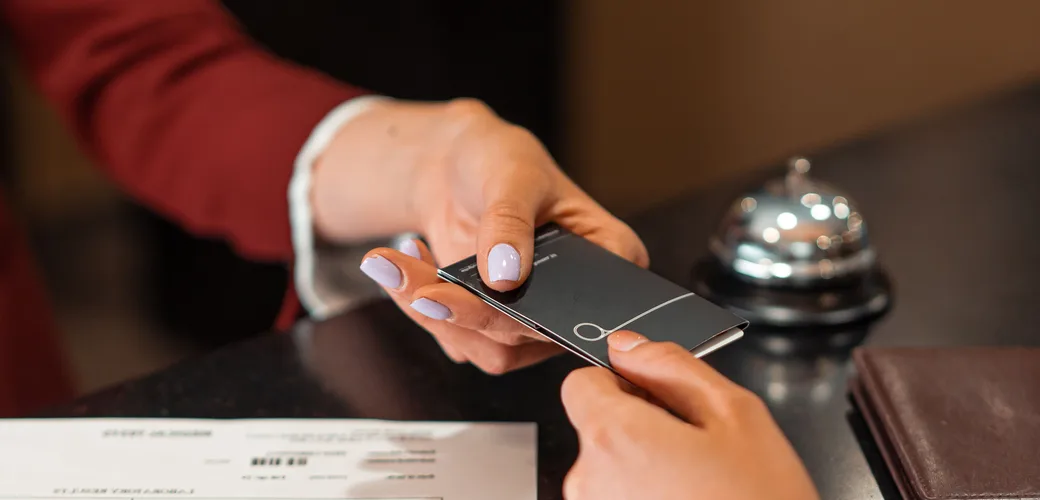
Hotel reception uniforms for seated work
Check the jacket, waistband and name badge at the reception desk while a colleague sits, turns to the printer and hands a guest their room key.
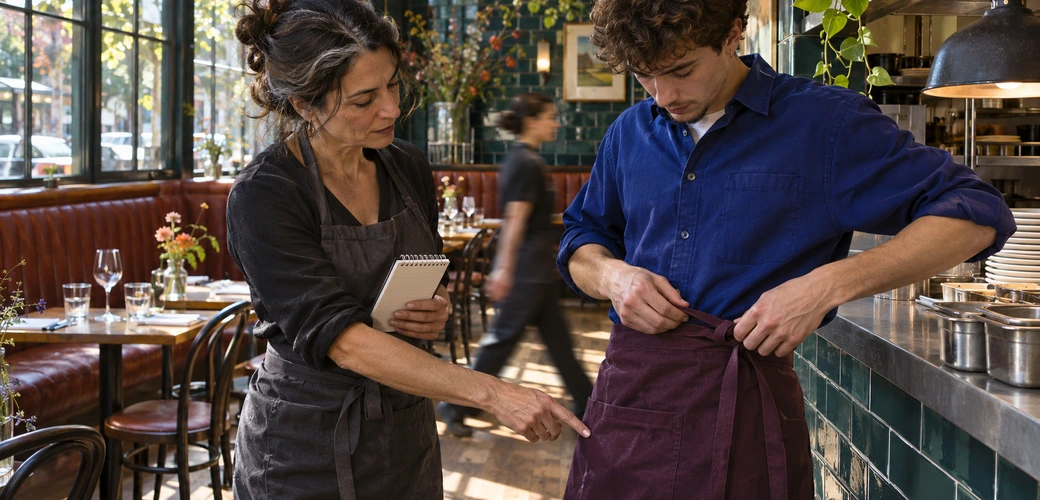
Restaurant uniforms for new starters
Bring a new starter into an existing restaurant wardrobe. Check the garment reference, available pieces and the difference between a repeat order and a change.
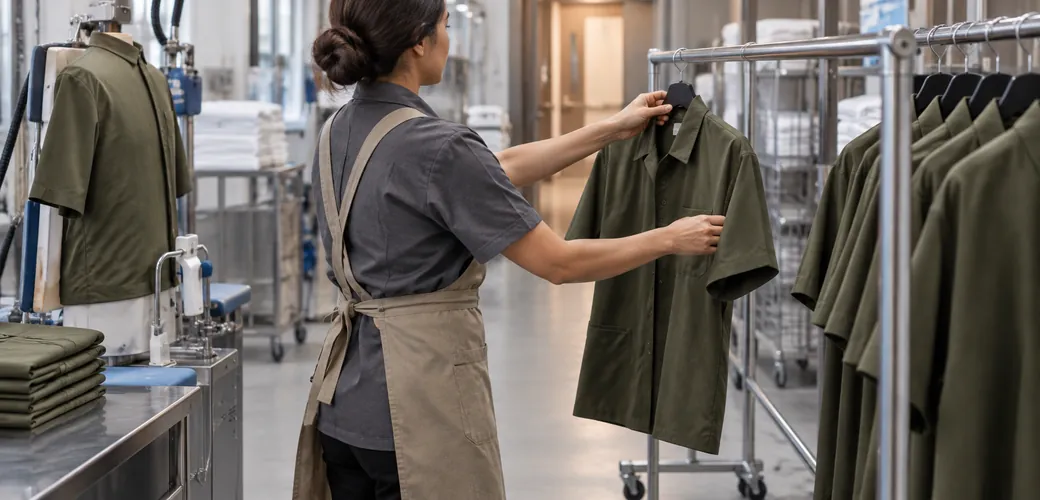
Hotel uniform laundry requirements
Map collection, sorting, washing, drying, finishing and return so hotel, laundry and supplier can approve one compatible uniform process.
Hotel uniform durability diagnosis
Record where hotel uniforms wear out and decide whether to repair, reorder or review the design. Includes a practical decision example.
How to compare hotel uniform fabric samples
A method for comparing hotel uniform fabric samples by role, from a coded swatch review to a practical check on the finished garment.
Hotel uniform fabric guide
A role-led guide for turning hotel laundry, climate, movement and appearance needs into a fabric brief suppliers can answer with evidence.