Restaurant uniforms for new starters: issue, fit check and reorders
Bring a new starter into an existing restaurant wardrobe. Check the garment reference, available pieces and the difference between a repeat order and a change.

- Identify the current garment reference before discussing quantity.
- Separate available pieces, a repeat order and a design change.
- Record the wearer check and the next decision owner.
Restaurant uniforms for a new starter begin with the wardrobe already in use. Find the garment reference, check whether suitable pieces are available and separate a repeat order from a design change. Record the role, the decision owner and any unresolved question before treating the issue as complete.
If a new starter reveals a gap in the wardrobe, describe it in your Custom Uniforms brief. Explain the role and bring the reference for the clothing already used. The question is what the person needs to do and which existing decision can safely be carried forward. If the restaurant is part of a hotel, see how restaurant and bar roles fit into custom hotel uniforms.
Project facts as of 12 November 2026
| Minimum order | 10 pieces per garment type |
|---|---|
| Reorders of an approved garment | No minimum |
| Reorder production | 3 weeks |
| Sampling | 3 weeks |
Which restaurant uniforms can you repeat?
Start with the garment reference rather than the job title. A label such as server or kitchen assistant does not identify a particular shirt, apron or pair of trousers. Find the reference that your team uses and the record that describes it. Check whether that record is still the one used for current clothing. Keep an unanswered material or construction question visible instead of filling it in from memory.
Place an existing garment beside the reference when possible. Look for differences in the opening, pocket arrangement and fastening. A piece with a similar colour can belong to a different version. A photograph can help explain the appearance, but it cannot establish the exact specification. The aim is to identify what you are asking to repeat before discussing quantity.
Can available clothing cover the immediate need?
Check the pieces actually available for issue. Record the garment reference, its condition and whether the wearer can use it for the assigned task. A stored item is not automatically suitable simply because its size label matches an earlier entry. Let the new starter try the relevant movements and note any point that needs attention.
For example, a person joining the dining room team may need to carry a plate while reaching for an order pad. Try that sequence with the available garment. If a pocket becomes awkward to reach, record the position and the object carried. Use the guide to inspecting wear if the condition of an existing piece also needs a decision.
Is the request a repeat order or a change?
Write down what is intended to stay the same and what you want to alter. If the proposed order uses the same garment reference, identify it clearly. If a pocket, cut, fabric or fastening is to change, make that change a separate question. Do not describe a revised specification as an unchanged repeat simply because it is intended for the same team.
PAMUUC’s minimum for a new custom garment is 10 pieces per garment type. Reorders of an approved garment have no minimum, so a single piece for one new starter is fine. Reorder production takes 3 weeks; we confirm availability, any specification changes and the delivery date before each order.
Sampling takes 3 weeks. Keep the sample decision separate from the reorder itself. Ask what must be checked before a changed garment is accepted. The fabric sample comparison guide can help structure the material question when it is part of the change.
What should the wearer check show?
Use the work the new starter will actually perform. Check a reach, a bend and access to the items carried during service. Note which garment was tried and what happened during each movement. Keep the observation concrete. “The pocket is difficult to reach while holding the pad” is easier to act on than a general statement that the garment feels wrong.
Separate a size-choice question from a request to change the design. A difficulty in one movement does not identify its cause on its own. Record it and assign the next decision to the relevant person. This guide does not confirm individual fit or the suitability of a fabric for a particular cleaning process. Those questions require the relevant check or specification.
Who closes the issue record?
Keep a short record of the role, the garment reference, the pieces issued or still needed, the unresolved question and the person responsible for the next decision. Record which item was actually handed over. If a replacement is later supplied, connect it to the same reference so that a future order can be understood without reconstructing the conversation.
Agree what completion means within your team. It may require a wearer check, a corrected reference or confirmation of a changed sample. Keep that decision visible alongside the order discussion. If several roles now need a different wardrobe, return to the uniform planning guide and describe the broader change. A new starter can reveal a useful project question without making every issue a new collection.
Related reading
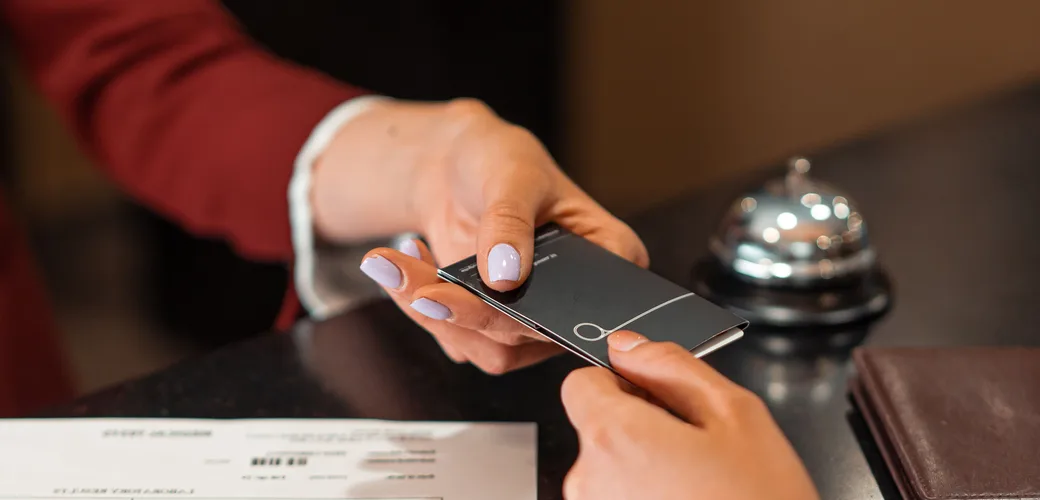
Hotel reception uniforms for seated work
Check the jacket, waistband and name badge at the reception desk while a colleague sits, turns to the printer and hands a guest their room key.
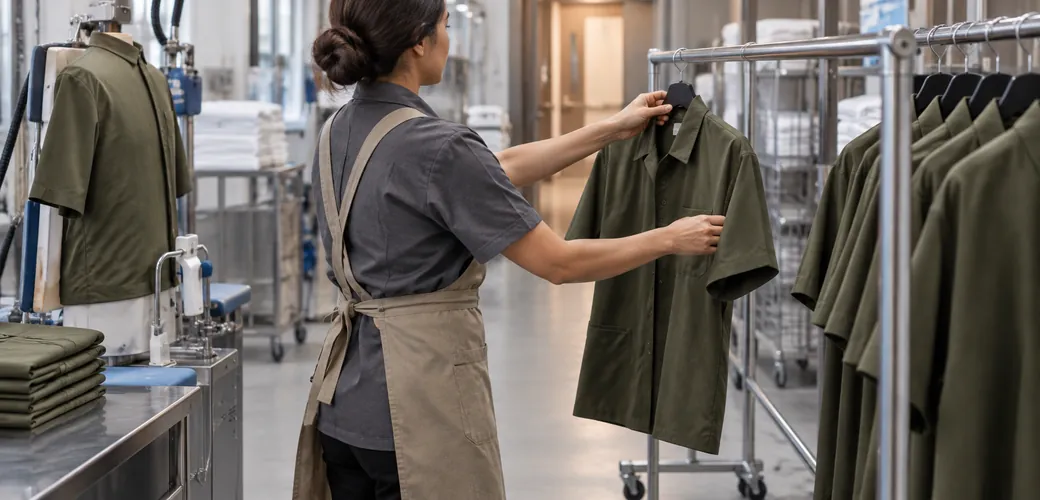
Hotel uniform laundry requirements
Map collection, sorting, washing, drying, finishing and return so hotel, laundry and supplier can approve one compatible uniform process.
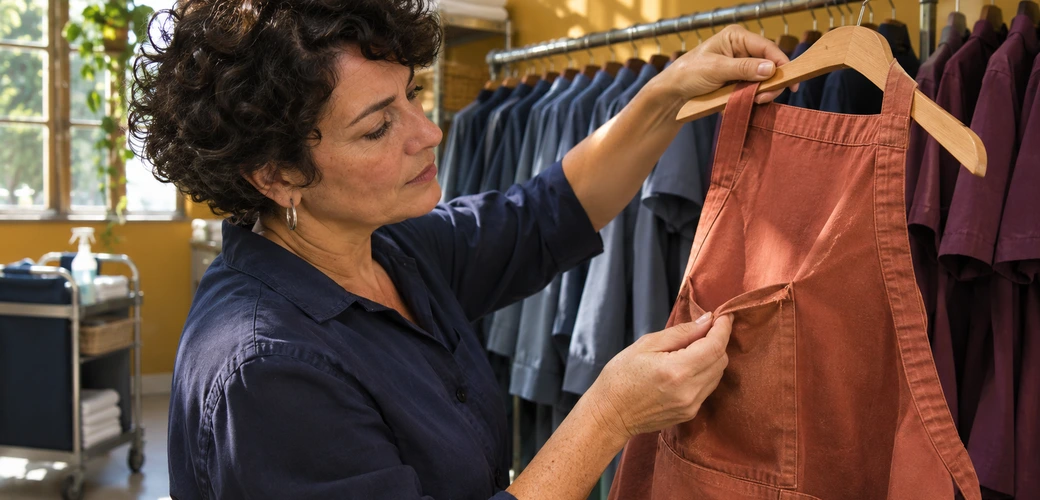
Hotel uniform durability diagnosis
Record where hotel uniforms wear out and decide whether to repair, reorder or review the design. Includes a practical decision example.
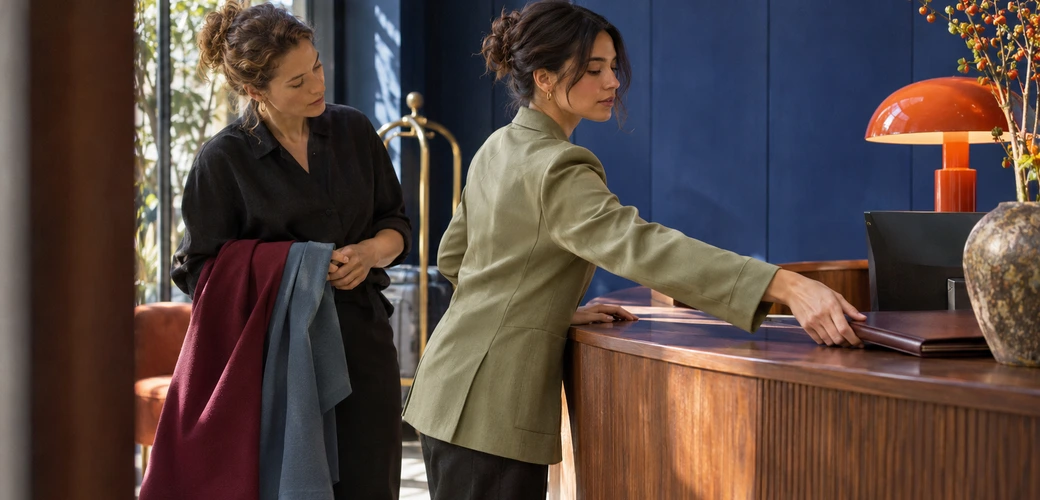
How to compare hotel uniform fabric samples
A method for comparing hotel uniform fabric samples by role, from a coded swatch review to a practical check on the finished garment.
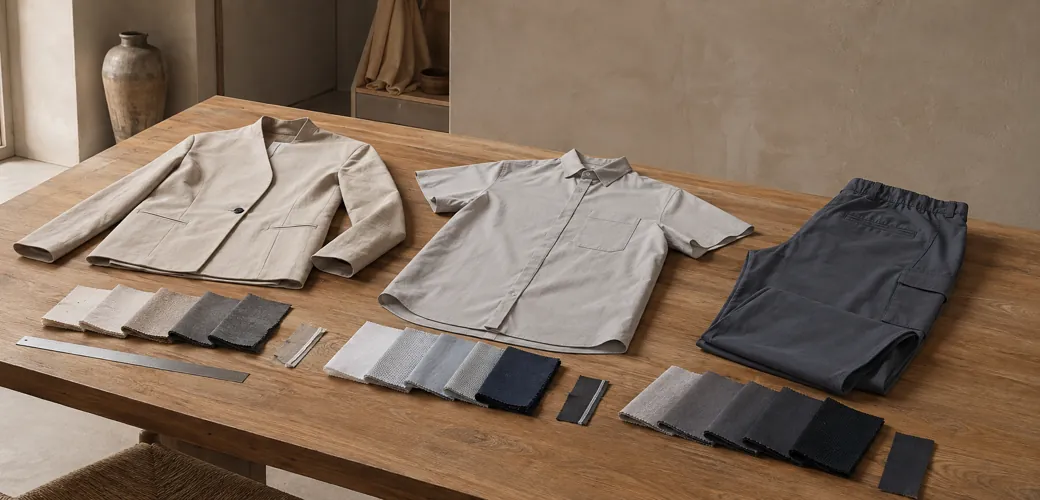
Hotel uniform fabric guide
A role-led guide for turning hotel laundry, climate, movement and appearance needs into a fabric brief suppliers can answer with evidence.
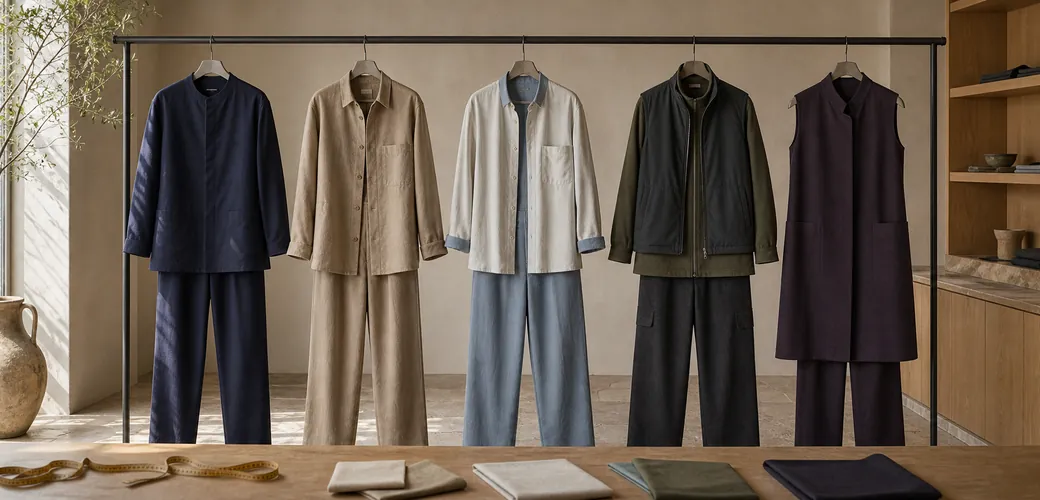
Hotel uniform design ideas that work
Explore five hotel uniform design directions. Compare each against staff roles, movement, climate, laundry and future reorders before choosing a concept.