How to compare hotel uniform fabric samples by role
Use a practical scorecard to compare shortlisted hotel uniform fabric samples by appearance, movement, care evidence and finished garment testing.
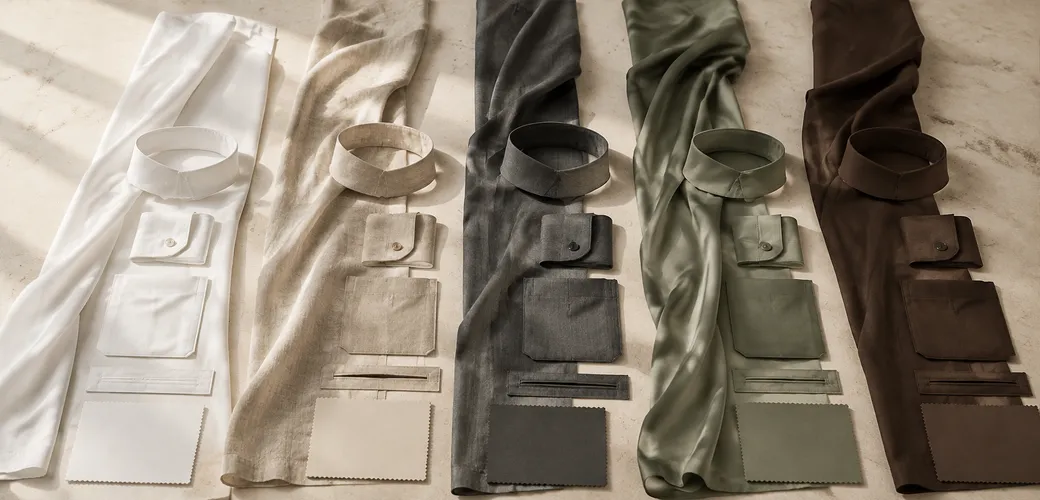
- Begin with an approved role and care brief, then score the exact samples offered by suppliers against it.
- Compare samples anonymously where possible so fibre labels and supplier language do not lead the first review.
- Link every score for colour, dimensions, abrasion and seams to relevant evidence rather than assumptions.
- Approve a candidate only after a finished garment sample has been reviewed in movement and through its intended care route.
Once a hotel has defined what each uniform must do, the next challenge is comparing the exact fabric samples offered by suppliers. This is not another search for the best fibre family. It is a controlled review of shortlisted cloths against one agreed role, care route and appearance brief.
Bring the approved brief to the sample table
Start with the garment and the shift. A reception jacket may need a controlled line after hours of standing and sitting. A restaurant shirt must move through heat, spills and fast changes of direction. A housekeeping trouser faces bending, pocket loads, surface friction and frequent care.
Bring those priorities to the review before opening the supplier envelopes. Include the working climate, movement, guest contact, soil exposure, opacity, touch and the real washing, drying and finishing route. The companion hotel uniform fabric guide explains how to turn those conditions into a supplier brief.
This article begins after that brief exists. Its purpose is to compare the physical samples, document why one advances and show where evidence or garment testing is still missing.
Build the scorecard before revealing the labels
Give each shortlisted cloth a neutral code such as Sample A, B or C. When practical, run the first visual and touch review without the composition or supplier name in view. This keeps a familiar fibre label, sustainability phrase or sales description from deciding the result before the cloth is examined.
Use the same scorecard for every candidate. Record surface character, weight, opacity, drape, stretch, recovery, touch, shine and response under the hotel lighting. Add a short observation beside every score. A number without a reason is difficult for design, operations, procurement and laundry teams to challenge later.
Do not score a loose swatch as if it were a finished uniform. Fold it over an opaque backing, hang a larger length when possible and place it beside the colours and materials used in the real space. Mark every quality that cannot be judged yet, including seam behaviour, pocket stability, pressing and recovery after wear.
The first review should narrow the field, not declare a winner. Keep two candidates when both answer the brief in different ways. One may offer the sharper, more structured line while another gives better ease and touch. Those differences become questions for role testing and finished garment development.
Reveal the full specifications after the observation round. Check whether the stated composition, weight, weave, finish and care guidance explain what the team saw. Record any contradiction as a question for the supplier rather than adjusting the score to fit the label.
Test reception and concierge samples for shape
For a reception jacket or concierge trouser, compare the shortlisted samples against the same silhouette. Ask how each candidate holds the intended line, responds after sitting, works under lobby lighting and returns to service after its actual care process.
The fabric also has to support the pattern. Shoulder structure, lining, pocket placement and ease through the back can change how polished the same cloth appears in motion. Review the jacket closed, open and with the arms reaching across a desk. Then check whether the trouser recovers at the knee and seat without relying on a vague crease resistant claim.
Test food and beverage samples in movement
For restaurant and bar roles, compare each shortlisted sample through the same movements and service conditions. The chosen candidate must balance airflow and touch with the need to recover, release visible soil through the chosen care route and return to the floor in the required condition.
Judge shirts, aprons, waistcoats and trousers separately. A soft service shirt and a structured waistcoat do not need the same fabric even when they share colour. Cuffs, plackets, pocket mouths and side seams also experience different stresses, so construction samples matter beside the main swatch.
Use the PAMUUC hospitality case study as one example of differentiating garments by role within a coherent wardrobe. It is a project reference, not proof that the same blend will suit another hotel.
Separate the spa and housekeeping reviews
Spa garments may place soft touch, fluid movement, opacity and comfort in humid zones near the top of the comparison. Score those qualities on the exact shortlisted samples, then confirm whether each cloth keeps the required appearance after the intended wash and drying process.
Housekeeping usually shifts the scorecard toward movement, pocket function, friction points, opacity and reliable care. Weight, stretch, recovery and seam construction decide whether the finished trouser supports repeated bending and lifting, so the same sample may score differently here than it does for another role.
Do not force spa and housekeeping into one material answer because both sit away from reception. Their contact, movement and care conditions are different. Shared colour or trim can keep the wardrobe coherent while the underlying cloth changes by role.
Match every score to relevant evidence
A composition label cannot confirm that a fabric will hold colour, retain dimensions, resist a given abrasion exposure or keep its seams intact. Those are separate questions. ISO 105-C06 addresses colour fastness to defined domestic and commercial laundering methods, while ISO 5077 addresses dimensional change after specified washing and drying.
ISO 12947-2 defines a Martindale method for determining specimen breakdown in applicable fabrics. ISO 13935-1 measures maximum force to seam rupture using a strip method. None of these methods supplies a universal lifespan claim, and a result is useful only when it covers the offered fabric, colour, finish and relevant construction.
Care evidence must also match the planned route. ISO 6330 defines domestic washing and drying procedures for textile testing. ISO 15797 provides industrial washing and finishing procedures for evaluating workwear, while noting that compatibility with the intended real process may still need confirmation.
Approve only through a finished garment sample
End the sample review with two candidates for each garment, not one winner for the whole hotel. Record why each candidate remains: appearance, movement, touch, care compatibility, evidence or construction potential. Keep any missing report or unanswered laundry question visible.
Make finished garment samples because the swatch does not show the full effect of pattern, lining, seams, pockets, trims and pressing. Review them in the actual light and movement of the role, then put them through the intended care route before approval.
The result is a traceable sample decision that operations, design, laundry and procurement can examine together. Use the PAMUUC design process to connect the shortlist to garment development, or request a first meeting to build a fabric sample scorecard for each role.
Related reading
Hotel uniform laundry requirements
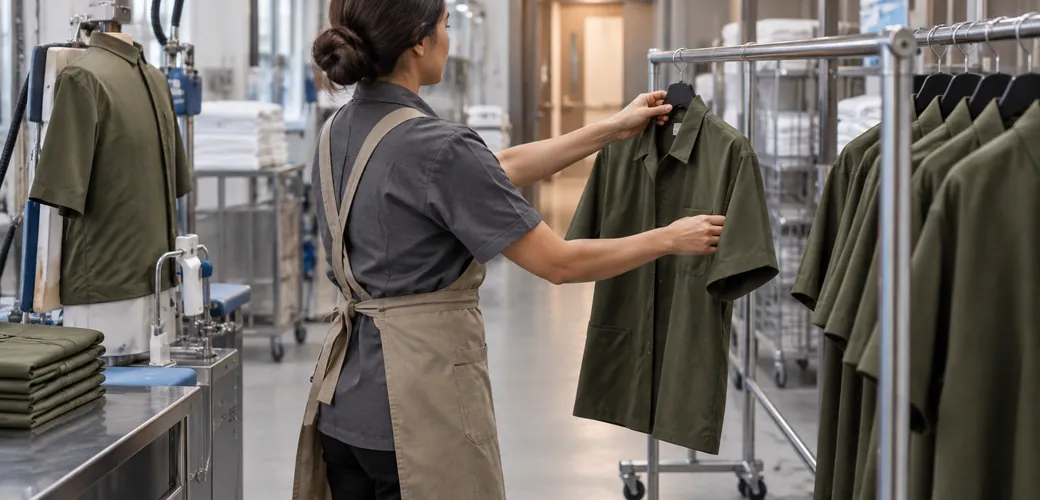
Map collection, sorting, washing, drying, finishing and return so hotel, laundry and supplier can approve one compatible uniform process.
Hotel uniform durability diagnosis
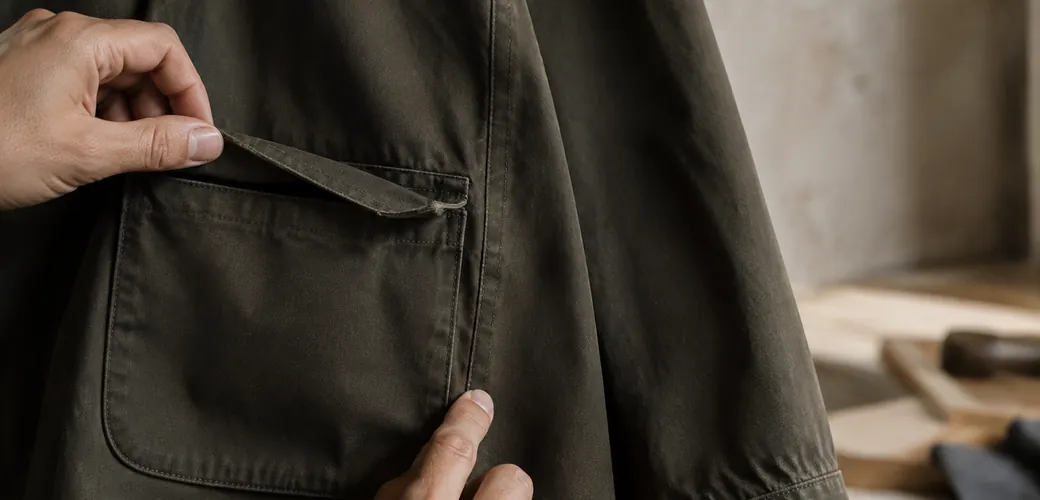
Diagnose fading, shrinkage, abrasion, seam damage and failed trims, then correct the specification behind premature hotel uniform failure.
Hotel uniform fabric guide
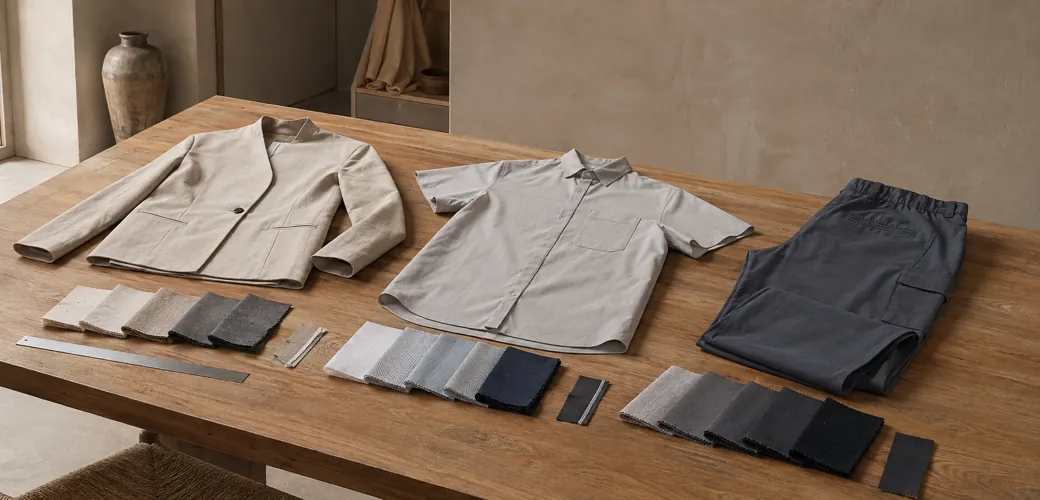
A role-led guide for turning hotel laundry, climate, movement and appearance needs into a fabric brief suppliers can answer with evidence.
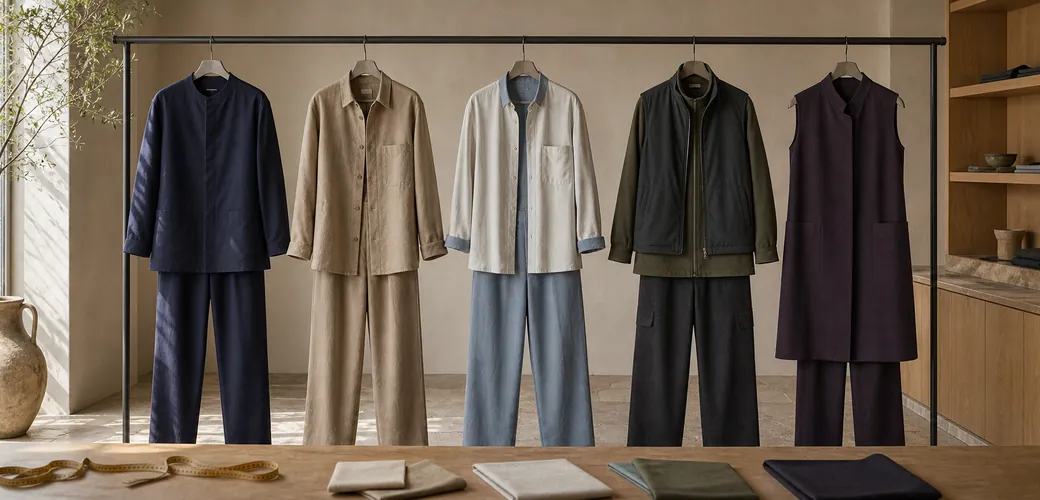
Hotel uniform design ideas that work
Five visual directions for hotel uniforms, each tested against real roles, climate, movement, care and continuity before it reaches the shortlist.
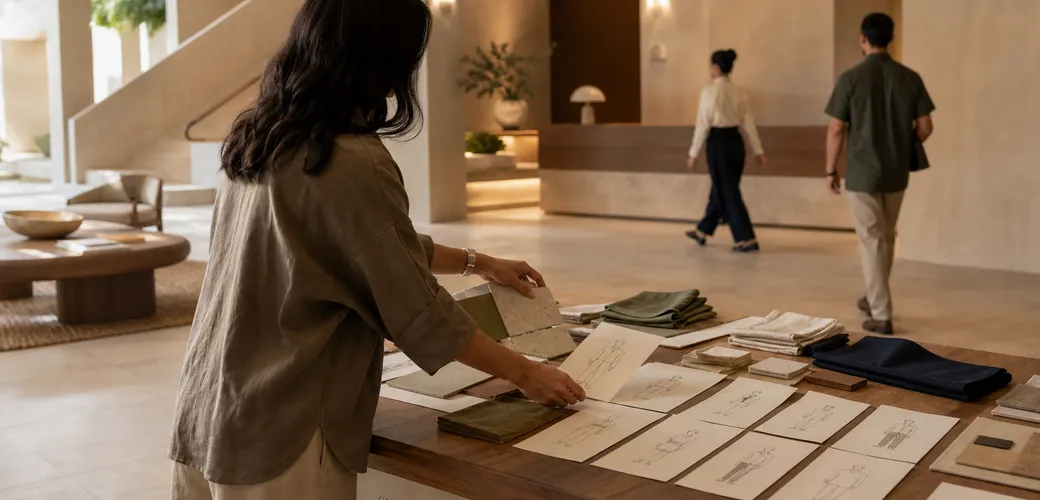
How to design hotel uniforms
A practical method for turning a hotel concept, team roles and operational needs into one coherent, supplier-ready uniform brief.
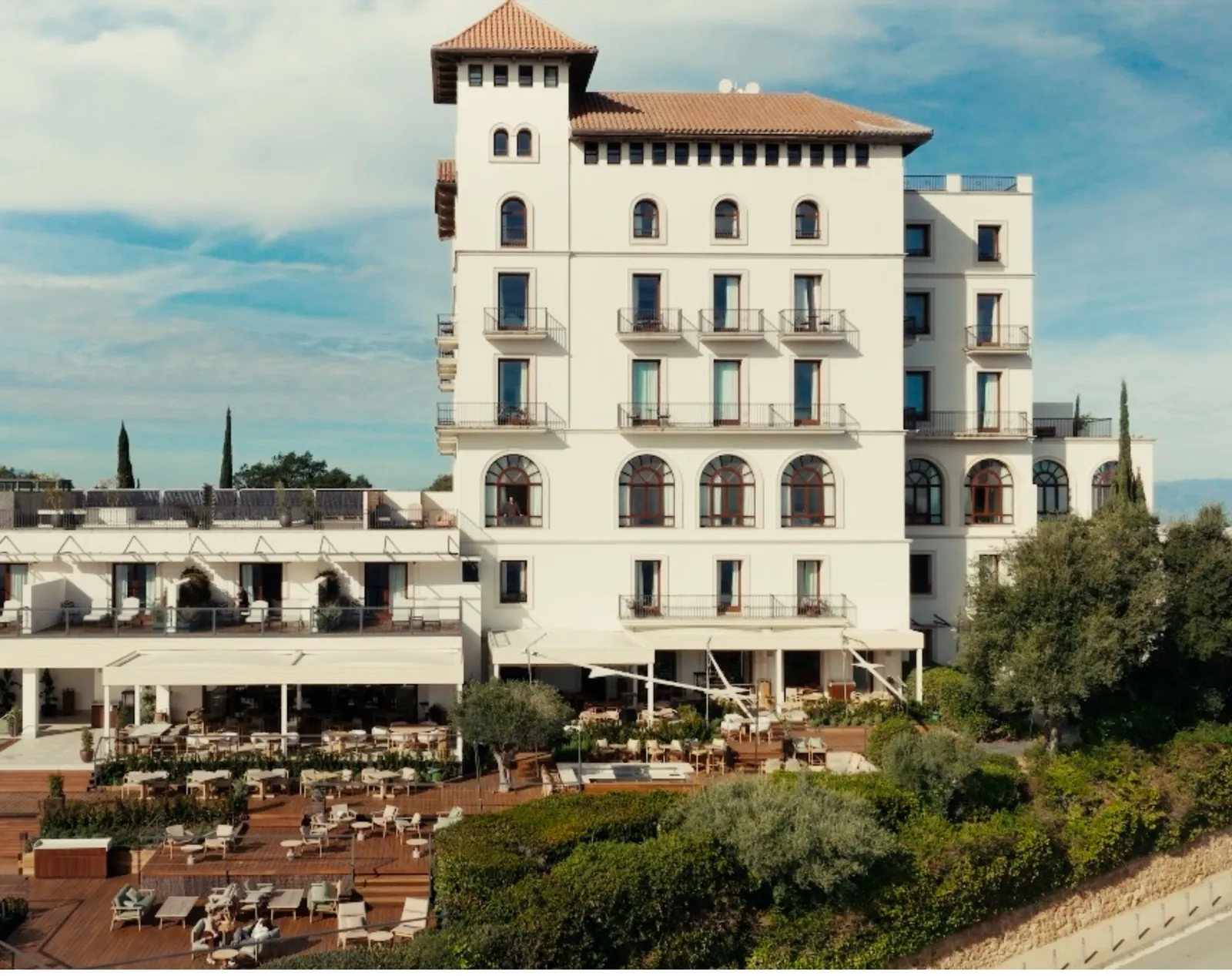
Custom hotel uniforms: design & durability
Discover how we designed custom uniforms for a five-star hotel in Barcelona, in line with the interior concept, using durable fabrics built for daily service.
Custom uniforms for dental clinics
A case study on how a premium dental clinic in Barcelona used custom uniforms to bring together space, brand image, and everyday use.
Uniforms for wellness studios
How to build a uniform system for wellness studio teams by aligning space, comfort, daily service, and fabric durability.