Hotel uniform laundry requirements: map the garment from hamper to hanger
Map collection, sorting, washing, drying, finishing and return so hotel, laundry and supplier can approve one compatible uniform process.
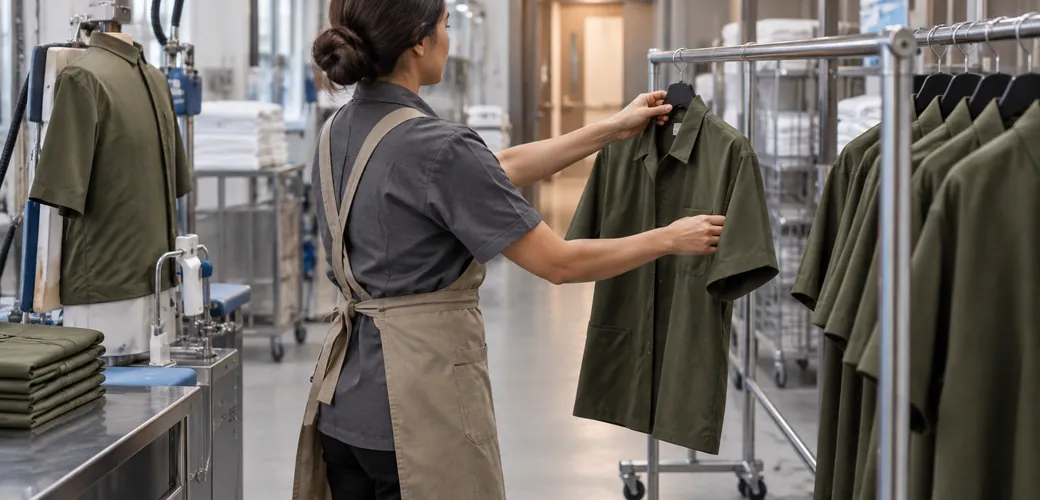
- Specify the complete laundry route, including collection, sorting, washing, drying, finishing, inspection and clean return.
- Domestic, commercial and industrial processes need different evidence and must not be treated as interchangeable.
- A care label states treatment limits, but it does not replace the hotel laundry operating instructions.
- Approve the finished garment in the intended process with the hotel, laundry and supplier present.
Hotel uniform laundry requirements should describe the complete route a garment will follow, not only a wash temperature or care symbol. Map collection, sorting, washing, drying, finishing, inspection and clean return before approving fabric, trims or construction, then ask the hotel, laundry and supplier to confirm the same process.
This route turns laundry from a late production question into a design input. It reveals which information must travel with the garment, which components need evidence, where appearance can change and who owns each decision before bulk production.
Map the route before specifying the garment
Begin where the worn uniform leaves the employee. Record who collects it, how it is identified, where it waits and how the clean replacement reaches the correct person or department. A reception jacket sent to a specialist cleaner may follow a different route from a restaurant shirt washed on site or a housekeeping trouser handled by an industrial laundry.
For every garment, write the sequence in plain operational language. Include collection point, container, transport, sorting, wash route, stain treatment, drying, finishing, inspection, storage and return. Add the normal point at which a damaged or missing item is reported. If the process changes by role, season or property, keep those routes separate.
The hotel uniform fabric guide helps translate role, climate and movement into material questions. This article starts one step later by turning the chosen care route into a shared operating and approval plan.
Sort by garment soil and components
Sorting decisions begin before the machine. Ask how garments are separated by colour, fibre, role, soil type and required treatment. A pale front of house shirt, a dark apron and a housekeeping garment exposed to cleaning products may not belong in the same load, even when they share a visual identity.
List every component that enters the process with the main fabric. That includes thread, buttons, zips, snaps, labels, embroidery, transfer marks, interfacing, lining and reinforcement. A shell fabric may tolerate a process that changes a contrasting trim or adhesive. Approve the complete construction, not a fabric swatch in isolation.
Record how stains are identified and treated, but do not invent a universal recipe. The relevant question is whether the intended stain process is compatible with the exact colour, finish, trim and garment construction. Keep unknown chemicals, dwell times or mechanical steps visible for the laundry partner to answer.
Separate domestic commercial and industrial routes
The word washable is not a sufficient requirement. ISO 6330:2021 specifies domestic washing and drying procedures for textile testing. These procedures are useful when the intended route is domestic or when a defined domestic method answers a particular test question.
ISO 15797:2017 provides industrial washing and finishing procedures for evaluating workwear intended for industrial laundering. It covers properties such as dimensions, colour characteristics, creasing, seam puckering, pilling and general appearance. It also notes that testing in the actual intended equipment and process may be advisable when confirming final compatibility.
Do not convert either standard into a claim that a garment has passed. Select evidence that matches the intended route, offered material, colour, finish and complete construction. If the hotel changes laundry provider, machine type or finishing method, review whether the approved evidence still answers the new process.
Turn the wash process into answerable questions
Ask the laundry to describe the real programme without reducing it to one number. Capture machine type, load grouping, detergent system, bleaching policy, stain treatment, mechanical action, rinsing, extraction and any controls that affect the garment. The hotel should also state the turnaround and appearance it needs when the item returns to service.
Colour and dimensions require separate evidence. ISO 105-C06:2010 addresses colour fastness to defined domestic and commercial laundering procedures. ISO 5077:2007 specifies a method for determining dimensional change after appropriate washing and drying procedures. Neither page supplies a result for the proposed uniform.
Ask the supplier for reports tied to the exact fabric, colour and finish being offered. Then decide whether a complete garment trial is needed to examine seams, trims, contrast areas, shape and appearance together. The goal is a list of answered questions, not a folder of unrelated certificates.
Include drying finishing and inspection
Laundry does not end when washing stops. Record whether the garment is line dried, tumble dried, cabinet dried, pressed, steamed or passed through another finishing stage. Note how it is cooled, hung, folded and stored before return. Heat, pressure, movement and handling after washing can affect shape and presentation.
Define the inspection point and the approval standard in words that different teams can use. Check clean appearance, odour, surface, colour, dimensions, seams, closures, labels and the final pressed or hung form. Compare the trial garment with an approved control where practical, and record changes instead of relying on memory.
The hotel uniform durability guide begins when a visible symptom needs diagnosis. Here, the aim is to agree the route and inspection method early enough to prevent avoidable incompatibility.
Treat the care label as a limit
ISO 3758:2023 establishes care labelling symbols that communicate the most severe treatments which do not cause irreversible damage during textile care. The symbols support care communication, but they are not a complete hotel laundry manual and they do not describe every operational handoff.
The supplier must propose validated care information for the finished garment. The laundry must confirm that its intended process stays within that information and addresses the hotel's needs. The hotel must decide where the approved instructions live, how exceptions are handled and what happens when a label becomes unreadable or a garment changes route.
Keep the operating sheet more specific than the sewn label. It can connect garment code, role, colour group, wash route, stain treatment boundary, drying and finishing method, inspection points, exception path and responsible owners without crowding the garment itself.
Approve one process together
Before bulk production, put the hotel, laundry and supplier around the same finished garment and the same route. The hotel confirms role, collection, turnaround, appearance and return. The laundry confirms sorting, treatment, drying, finishing and inspection. The supplier confirms the offered materials, components, construction, care information and supporting evidence.
Run a trial through the intended process when required, then review the complete result. Record what was tested, which route was used, what changed and what remains open. Approve only the route and construction actually examined. If a later operational change affects that route, reopen the relevant approval instead of assuming compatibility.
The PAMUUC hospitality article shows how role differences belong inside one coherent wardrobe. Use the PAMUUC design process to connect laundry requirements with sampling and fitting, or request a first meeting to map the route before uniforms enter production.
Related reading
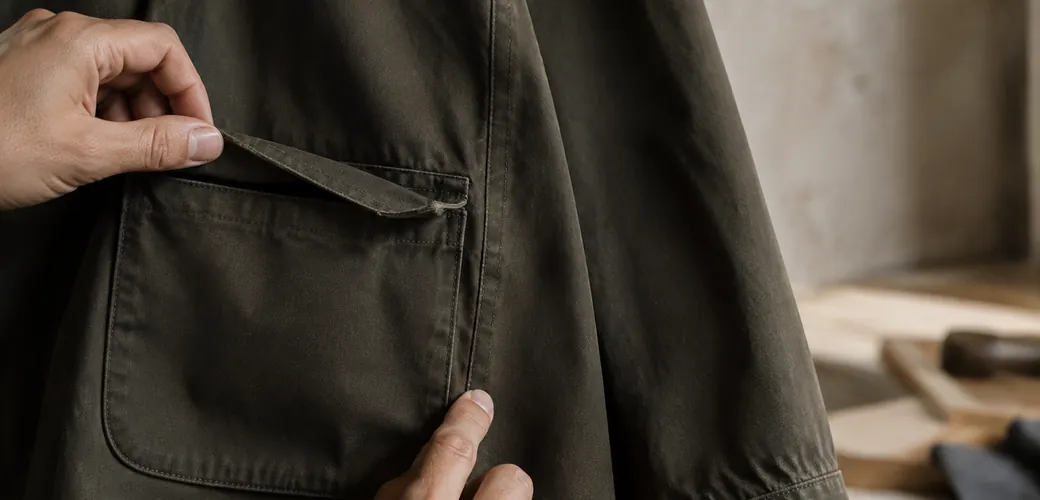
Hotel uniform durability diagnosis
Diagnose fading, shrinkage, abrasion, seam damage and failed trims, then correct the specification behind premature hotel uniform failure.
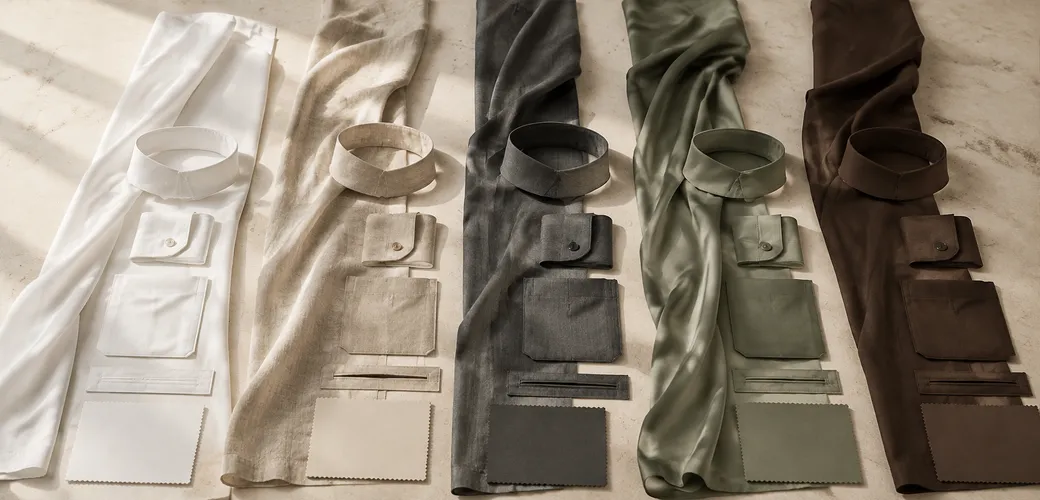
How to compare hotel uniform fabric samples
Use a practical scorecard to compare shortlisted hotel uniform fabric samples by appearance, movement, care evidence and finished garment testing.
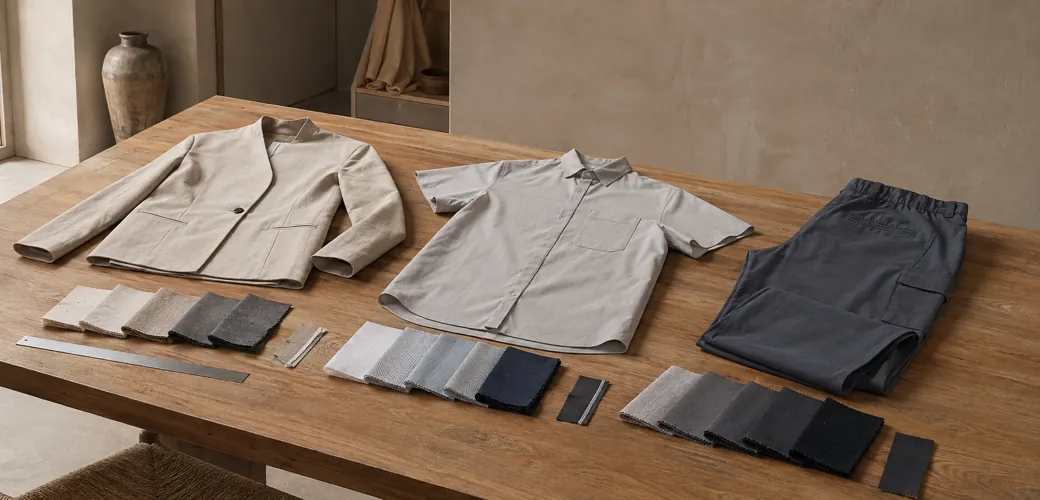
Hotel uniform fabric guide
A role-led guide for turning hotel laundry, climate, movement and appearance needs into a fabric brief suppliers can answer with evidence.
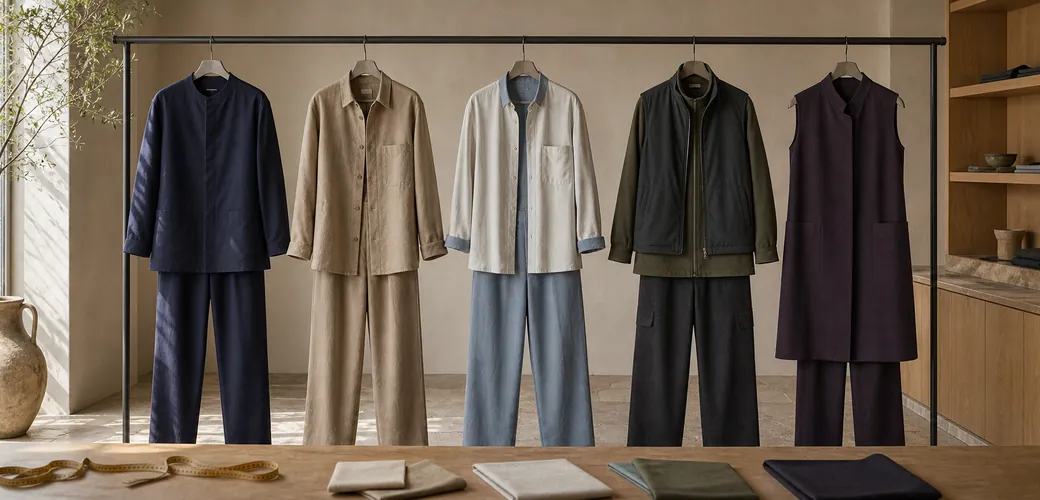
Hotel uniform design ideas that work
Five visual directions for hotel uniforms, each tested against real roles, climate, movement, care and continuity before it reaches the shortlist.

How to design hotel uniforms
A practical method for turning a hotel concept, team roles and operational needs into one coherent, supplier-ready uniform brief.

Custom hotel uniforms: design & durability
Discover how at METT Barcelona we designed bespoke uniforms in line with the hotel concept, using durable fabrics for functional hotel uniforms.

Custom uniforms for dental clinics
A case study on how a premium dental clinic in Barcelona used custom uniforms to bring together space, brand image, and everyday use.

Uniforms for wellness studios
How to build a uniform system for wellness studio teams by aligning space, comfort, daily service, and fabric durability.