Hotel uniform fabric guide: choose from the shift backwards
A role-led guide for turning hotel laundry, climate, movement and appearance needs into a fabric brief suppliers can answer with evidence.
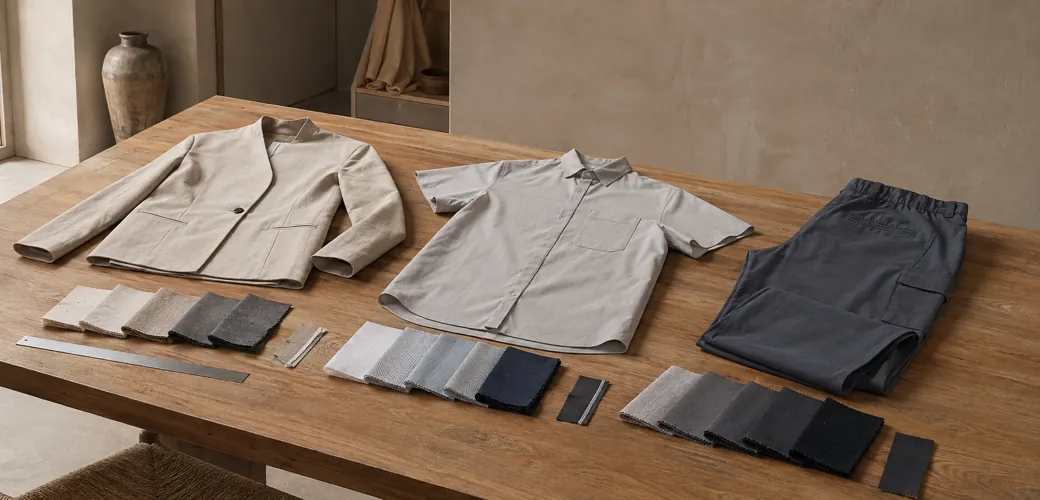
- Define the real wash and finishing route before comparing fibres, weights or finishes.
- Specify fabric by role and climate because presentation, service and high-movement work create different demands.
- Turn words such as light, soft or durable into observable criteria for weight, weave, recovery, touch and opacity.
- Ask for separate evidence on colour, dimensions, abrasion and seams; one result cannot stand in for the others.
A useful hotel uniform fabric guide starts with the shift, the climate and the care route, not with a favourite fibre. The right output is not one universal fabric but a role-specific shortlist that a supplier, laundry partner and hotel team can examine against the same brief.
Start at the laundry door: domestic, commercial or industrial care?
Ask where the garment will actually be cleaned, dried and finished before requesting swatches. A reception jacket sent to a specialist cleaner follows a different route from a restaurant shirt washed on site or a housekeeping trouser processed by an industrial laundry. Temperature alone does not describe that route; detergent, mechanical action, drying and finishing also shape what the garment experiences.
The distinction matters when reviewing evidence. ISO 6330 defines domestic washing and drying procedures for textile testing. ISO 15797 provides defined industrial washing and finishing procedures for evaluating workwear and notes that the intended real process may still need to be tested when confirming compatibility.
Record the current laundry route, the proposed route and any uncertainty between them. Then ask the laundry partner which programme will be used for each garment, including drying and finishing. A fabric described only as washable has not yet answered the hotel’s question.
Branch by role: presentation, service or high-movement work
Group roles by what the garment must do rather than by department name. Presentation-led garments need a controlled line under guest-facing light and after periods of sitting or standing. Service garments must support repeated reaching, carrying and quick changes of direction. High-movement garments need clearance for bending, lifting, kneeling and working around equipment.
These groups are not a ranking. A housekeeping trouser is not a less refined version of a reception trouser; it has a different job. The same fabric can also behave differently when used in a close jacket, an open shirt or a trouser with stressed pocket and seam areas. Construction, ease and reinforcement belong beside composition in the brief.
Use the PAMUUC hospitality case study as an example of differentiating garments by role within one coherent wardrobe. It is a project reference, not proof that one material choice will work for another property.
Branch by climate: controlled interior, terrace, spa or season
Next, map the microclimate of each role. A controlled lobby, a sunlit terrace, a humid spa, a warm service station and an outdoor arrival point can exist within the same hotel. Note where the person moves between them and whether a layer is worn continuously or added only for part of a shift.
Translate climate into questions rather than assumptions. Does the fabric feel comfortable when the wearer moves? Does a structured layer become oppressive in a warm zone? Does a light colour remain opaque in strong daylight? Can an outer layer be removed without breaking role recognition? Breathability, drying, layering and opacity may pull the shortlist in different directions.
Climate also changes through the year. If the hotel needs seasonal options, preserve a shared colour and construction language while adapting weight or layering. That keeps the wardrobe coherent without forcing one cloth to solve incompatible conditions.
Translate sensations into weight, weave, stretch, recovery and touch
Words such as light, soft, crisp, breathable and durable are useful only when the team agrees what they mean in use. Convert each word into something that can be seen, handled or tested on the garment. Light may refer to mass, visual colour or how the cloth feels in motion. Soft may refer to surface touch, drape or reduced structure.
Build the shortlist across connected variables:
- Weight and opacity: enough coverage for the colour and lighting, without unnecessary bulk
- Weave or knit: the structure that supports drape, airflow, surface character and natural give
- Stretch and recovery: movement during the task and the ability to return to the intended shape
- Touch and lining: what meets the skin, where friction occurs and whether an extra layer changes comfort
- Drying and finishing: what the actual care route requires before the garment returns to service
Fibre composition remains important, but it cannot answer these questions alone. Compare the complete cloth and garment construction, then keep the language specific enough that a supplier can explain why a sample belongs on the shortlist.
Ask for colour, dimension, abrasion and seam evidence
Do not let one attractive test value represent the whole garment. Different questions need different evidence. ISO 105-C06 addresses colour fastness to defined domestic and commercial laundering methods, while ISO 5077 addresses dimensional change after specified washing and drying procedures.
Abrasion and seam performance are separate again. ISO 12947-2 defines a Martindale method for determining specimen breakdown in applicable fabrics. ISO 13935-1 measures maximum force to rupture a straight seam using a strip method. Neither result, on its own, predicts the service life of a finished hotel uniform.
Ask which method, procedure and sample were used; whether the report covers the offered fabric and colour; and whether garment construction was included. Record the answer as evidence to review, not as a marketing adjective. If there is no relevant result, name the uncertainty and test the candidate against the intended route before approval.
Run the three-garment decision tree
Take a reception jacket, restaurant service shirt and housekeeping trouser through the same sequence. First define care. Then record climate, movement, guest-facing appearance, soil exposure, touch points and opacity. Only then compare fabric options and evidence.
The reception jacket may place structure, recovery and finish near the top of the brief while still needing comfortable reach at a desk. The restaurant shirt may give more weight to airflow, quick movement, spills and turnaround. The housekeeping trouser may focus on bending clearance, pocket stress, friction, opacity and compatibility with the real wash programme.
The exercise should produce different priorities, not predetermined fibre winners. If one candidate appears in all three shortlists, require it to answer each role independently. Standardising a fabric can simplify a wardrobe, but convenience is not evidence of role fit.
Issue the fabric brief for joint sign-off
Put the decision in one document that operations, the laundry partner, the designer and the supplier can read. For every garment, record role, environment, movement, wear pattern, soil exposure, care route, required appearance, touch, weight, weave, stretch, recovery, drying, opacity and the evidence still needed.
Name who confirms each part. Operations can describe the shift; the laundry partner can confirm the process; the supplier can identify the offered cloth and reports; and the design team can connect those facts to pattern, construction and wardrobe coherence. Unknowns should remain visible until sampling or testing resolves them.
Use the companion guide on how to design hotel uniforms to connect the fabric brief to the wider guest journey and role system. Then review the PAMUUC design process or request an introductory meeting to turn the three-garment exercise into a role-specific shortlist ready for samples and joint sign-off.
Related reading
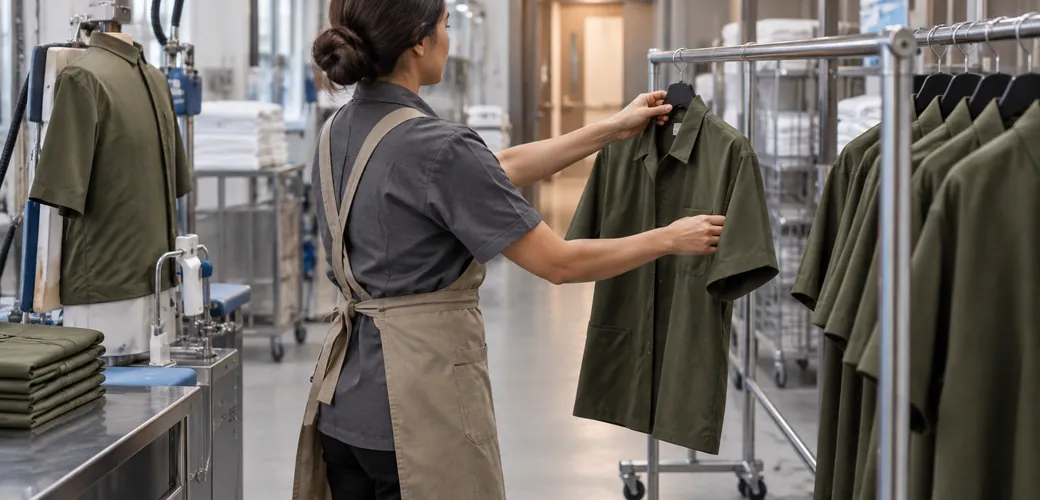
Hotel uniform laundry requirements
Map collection, sorting, washing, drying, finishing and return so hotel, laundry and supplier can approve one compatible uniform process.
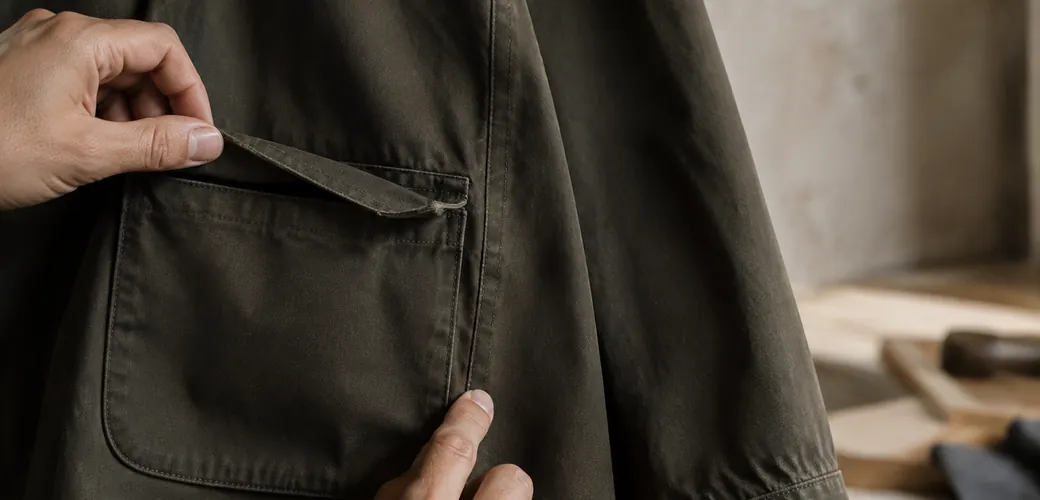
Hotel uniform durability diagnosis
Diagnose fading, shrinkage, abrasion, seam damage and failed trims, then correct the specification behind premature hotel uniform failure.
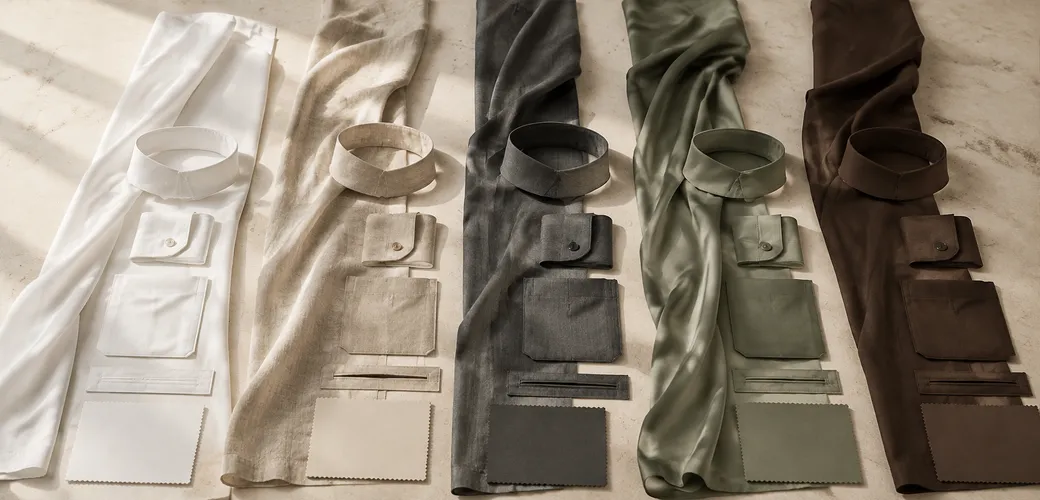
How to compare hotel uniform fabric samples
Use a practical scorecard to compare shortlisted hotel uniform fabric samples by appearance, movement, care evidence and finished garment testing.
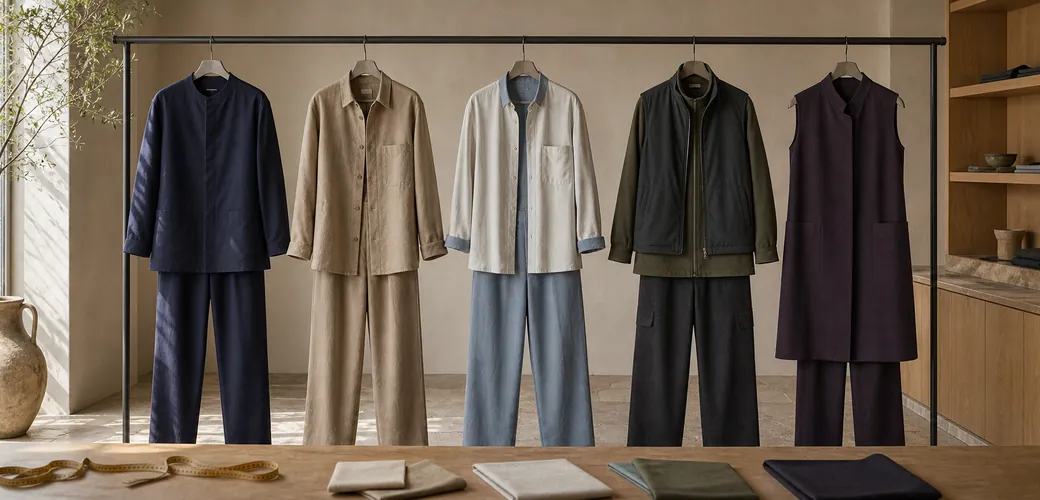
Hotel uniform design ideas that work
Five visual directions for hotel uniforms, each tested against real roles, climate, movement, care and continuity before it reaches the shortlist.
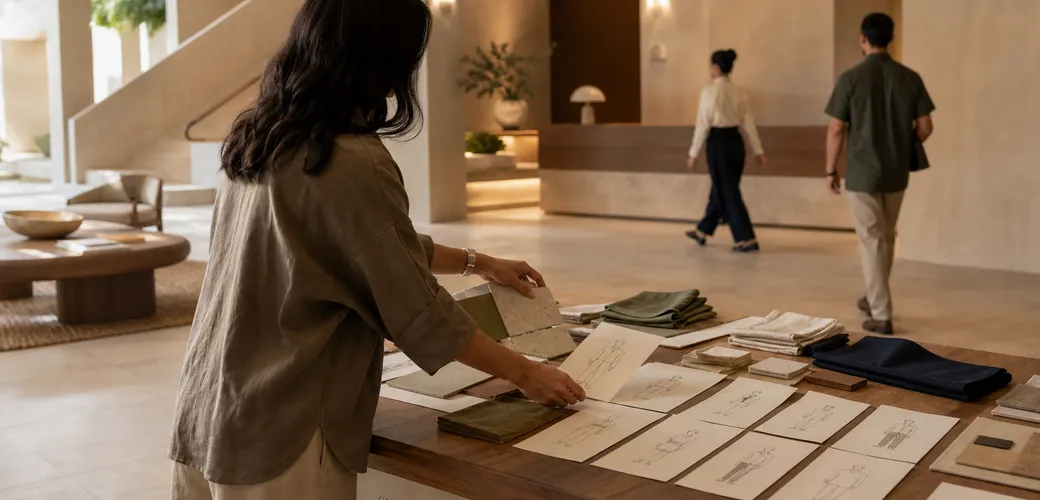
How to design hotel uniforms
A practical method for turning a hotel concept, team roles and operational needs into one coherent, supplier-ready uniform brief.
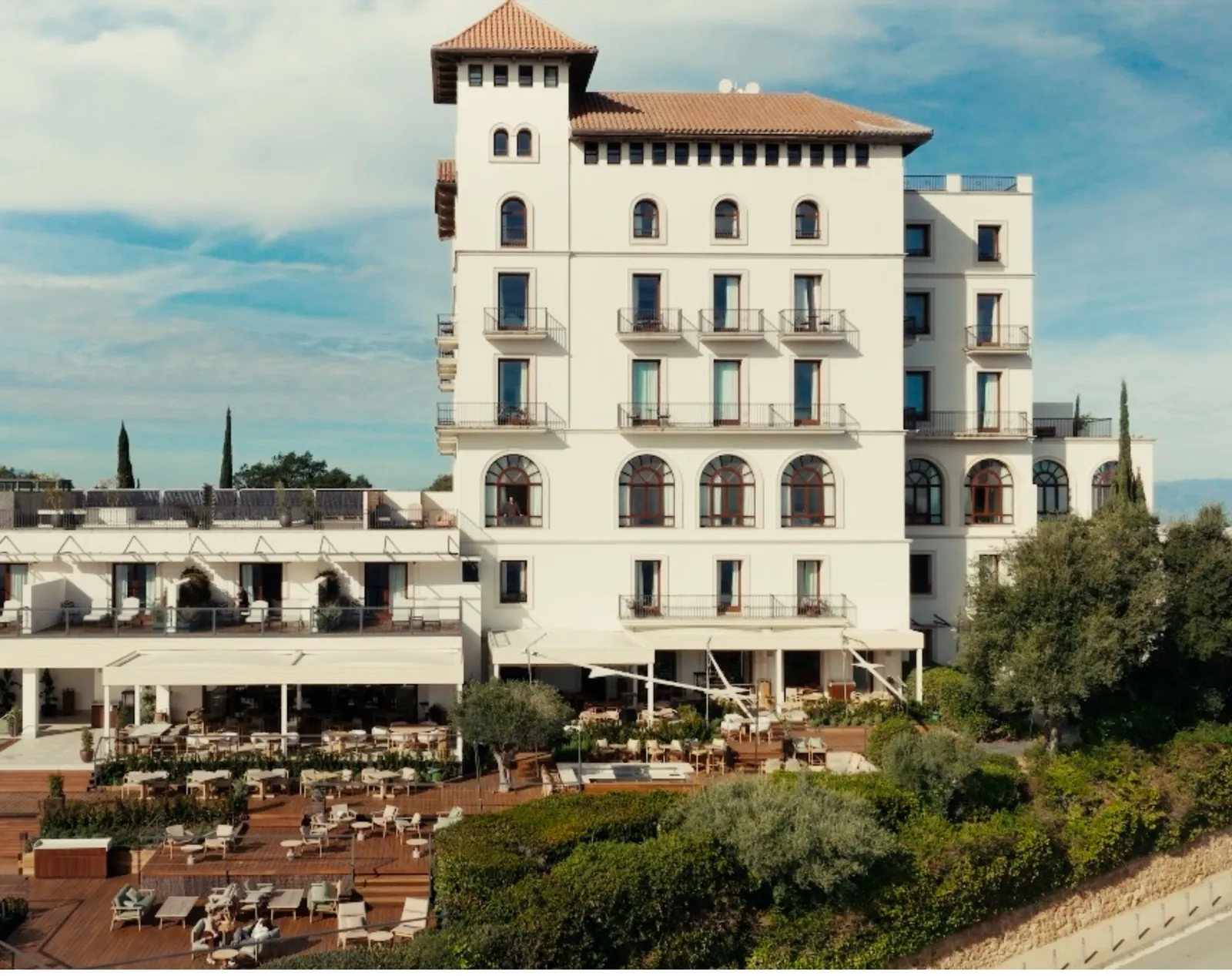
Custom hotel uniforms: design & durability
Discover how we designed bespoke uniforms for a five-star hotel in Barcelona, in line with the interior concept, using durable fabrics built for daily service.

Custom uniforms for dental clinics
A case study on how a premium dental clinic in Barcelona used custom uniforms to bring together space, brand image, and everyday use.
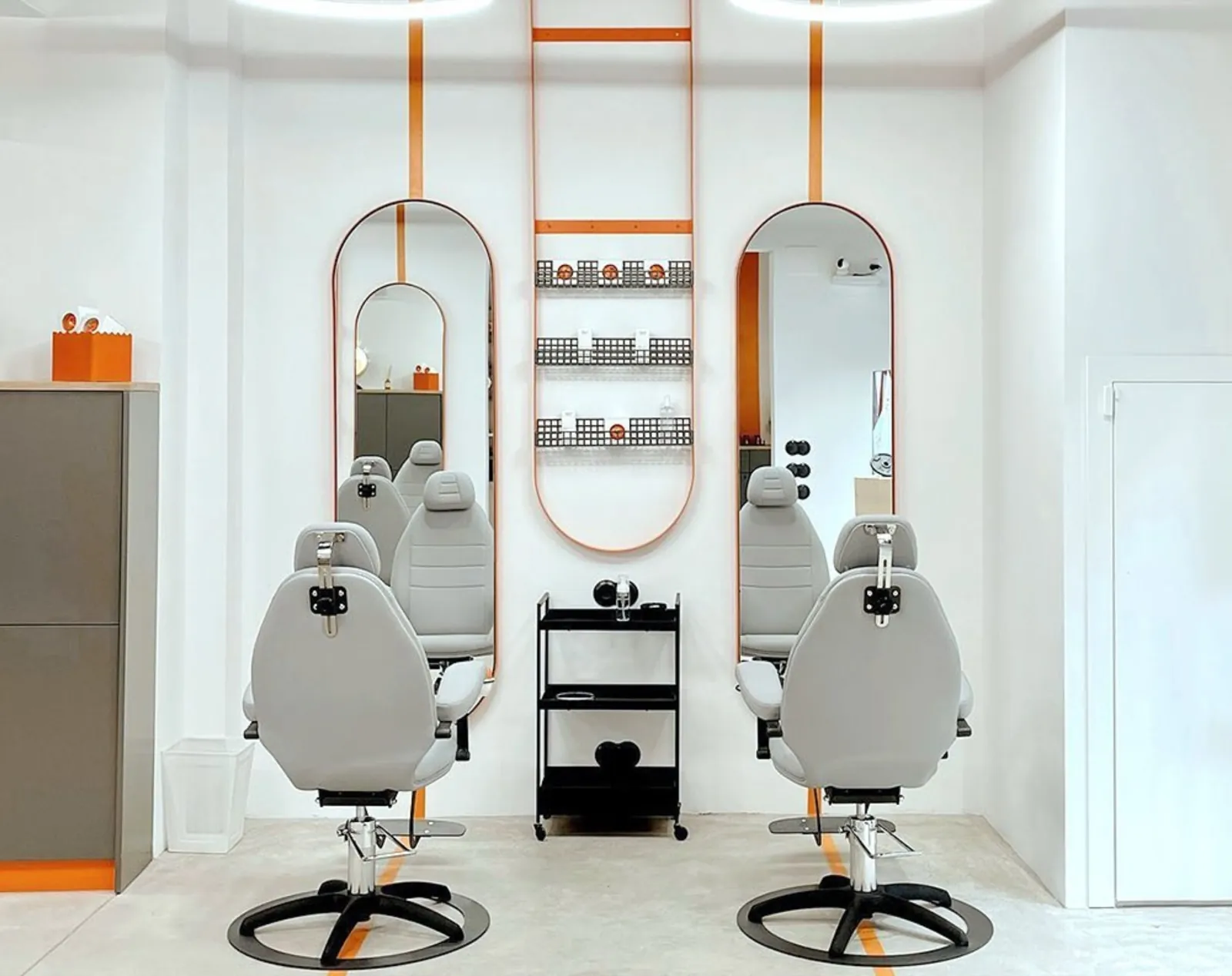
Uniforms for wellness studios
How to build a uniform system for wellness studio teams by aligning space, comfort, daily service, and fabric durability.