How to design hotel uniforms around the guest journey
A practical method for turning a hotel concept, team roles and operational needs into one coherent, supplier-ready uniform brief.
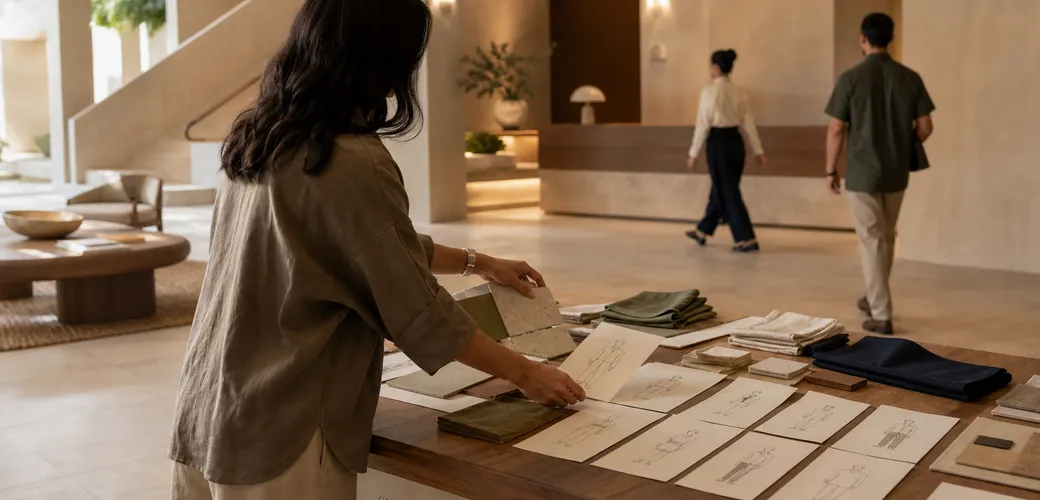
- Start with the property and the guest journey before choosing garments or fabrics.
- Map each role through movement, tools, climate, guest contact and care requirements.
- Create one wardrobe grammar, then give each role the differences it genuinely needs.
- Test the concept against fitting, laundering, onboarding, replacement and repeat orders.
Design hotel uniforms by starting with the guest journey, not a garment catalogue. Read the property, observe how every role works, create a shared wardrobe grammar, then test each choice against care, fitting, replacement and onboarding.
The beautiful sample that fails at check-in
Imagine a reception jacket that looks convincing on a hanger. At the desk, its sleeve catches when the wearer reaches for a key card, its pocket cannot hold the tools used during a shift, and its fabric feels too warm after the lobby fills. The sample is attractive, but it has not yet answered the job.
This is the weakness of a product-first brief: it asks which garments the hotel likes before defining what the wardrobe must do. A useful brief begins with the sequence of service. It follows how a guest arrives, who welcomes them, where the interaction moves next and which teams become visible along the way.
Read the hotel before drawing clothing
Begin with a slow walk through the property. Notice architecture, materials, light, temperature, sound and the pace of service. A quiet coastal hotel, a formal city property and an active resort may all need polished uniforms, but they should not express polish in the same way.
The aim is not to copy the interior onto clothing. A stone wall does not need to become a stone-coloured jacket, and a decorative motif does not need to become embroidery. Translate the environment into design principles instead: restrained or expressive, soft or structured, tonal or contrasted, relaxed or formal.
Record the service character in plain language that different teams can use. When the designer, operations lead and general manager share the same words, early decisions become easier to explain and later revisions become easier to judge.
Follow the work, not the job title
Job titles are too broad to define garments. Two reception teams may stand, sit, move luggage, work outdoors or use different tools. Observe the shift and map guest contact, repeated gestures, carrying needs, temperature changes, exposure to spills and the layers required across the day.
Speak with the people who will wear the wardrobe. Research by Tu and colleagues examined relationships between uniform style, hotel image, employee self-perception and customer perceptions. Nelson and Bowen's resort study connected uniform attributes with employee attitudes and argued for involving staff in selection.
These studies do not prove that one design causes a business outcome. They do support a practical point: the brief should include both the person wearing the garment and the guest encountering it. A fitting can reveal proportion, but only work observation reveals whether the garment belongs in the shift.
Write one wardrobe grammar
A hotel does not need identical outfits for every department. It needs a set of shared rules that makes the team feel related while allowing each role to work naturally. That wardrobe grammar can define palette, silhouette, proportion, closure language, visible branding, layering and the level of formality.
Role differences should be intentional. Reception may need a more structured layer; food and beverage may need easier movement and replaceable aprons; housekeeping may need a cut that supports repeated reaching and bending. Shared colour relationships or construction details can hold these garments together without forcing them into one template.
This approach also prevents costume. A strong concept does not rely on literal themes or excessive decoration. It gives the team a clear presence that belongs to the property and remains credible during real work.
Send the concept through operations
Before approving a direction, follow it beyond the presentation board. Ask how each garment will be cleaned, issued, stored and replaced. Check whether layers work together, whether pockets serve real tools, whether fastenings can be handled easily and whether the proposed fabrics match the actual care route.
Then consider people entering and leaving the team. A wardrobe system needs a clear size approach, an agreed fitting method and enough specification detail to reproduce an approved garment later. Reordering should be designed into the project rather than treated as an emergency after launch.
The PAMUUC hospitality case study shows how spatial references, role differentiation and operational durability can meet inside one programme. It is proof of the method in a real hotel context, not a template that should be copied from one property to another.
Turn observations into a supplier-ready brief
The final brief should make decisions visible and unknowns explicit. It does not need to prescribe the finished design, but it should give the design and production team enough context to propose the right system.
- Property identity and service character, expressed in usable design words
- Every role, its working environment, guest contact, movement and tools
- Shared wardrobe rules and the differences required between departments
- Care route, climate, layering, fitting and functional constraints
- Garment issue, onboarding, replacement and repeat-order requirements
- Decision owners, approval points, launch priorities and items still to validate
Attach evidence where it helps: photographs of spaces, material references, role observations, existing garment problems and the care information available from operations. A brief becomes useful when another person can understand why a requirement exists, not only read what was requested.
Carry the brief into development
A good brief does not pre-design the supplier's answer. It creates the conditions for informed proposals, prototypes and fittings. Materials, patterns and details can then be judged against a common definition of the property, the work and the operational system.
Use the questions above as a working discovery document. Then review the PAMUUC design and development process or request a first meeting to turn the brief into a clear starting scope. The goal is not more garments; it is a coherent wardrobe in which every garment has a reason to exist.
Related reading
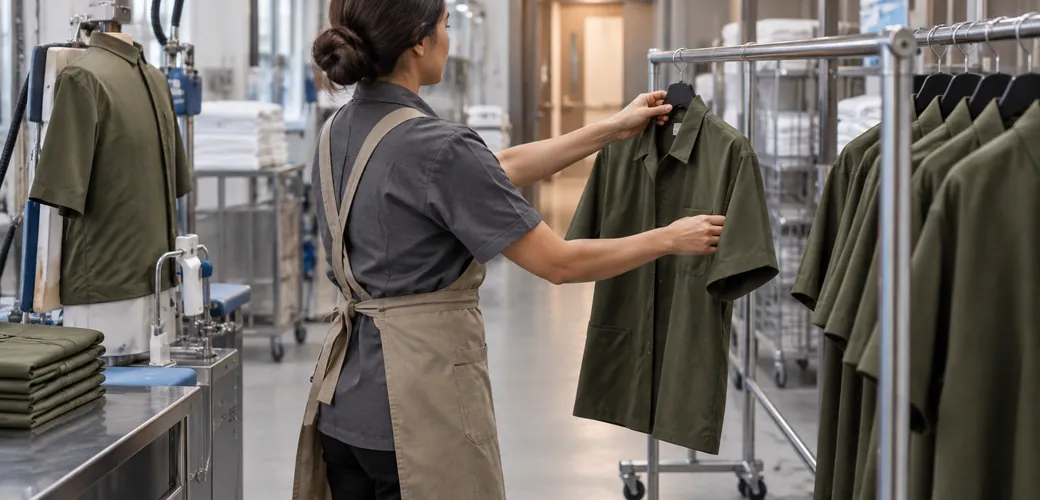
Hotel uniform laundry requirements
Map collection, sorting, washing, drying, finishing and return so hotel, laundry and supplier can approve one compatible uniform process.
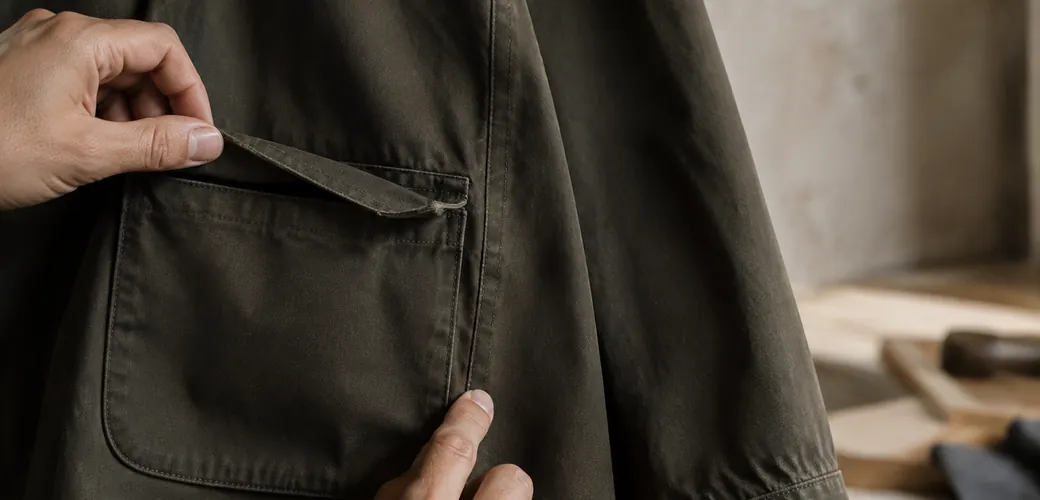
Hotel uniform durability diagnosis
Diagnose fading, shrinkage, abrasion, seam damage and failed trims, then correct the specification behind premature hotel uniform failure.
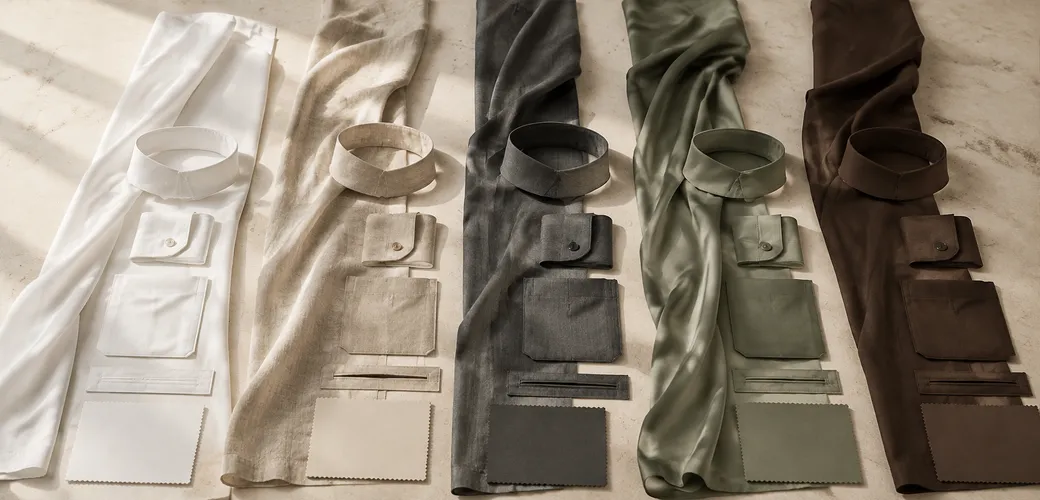
How to compare hotel uniform fabric samples
Use a practical scorecard to compare shortlisted hotel uniform fabric samples by appearance, movement, care evidence and finished garment testing.
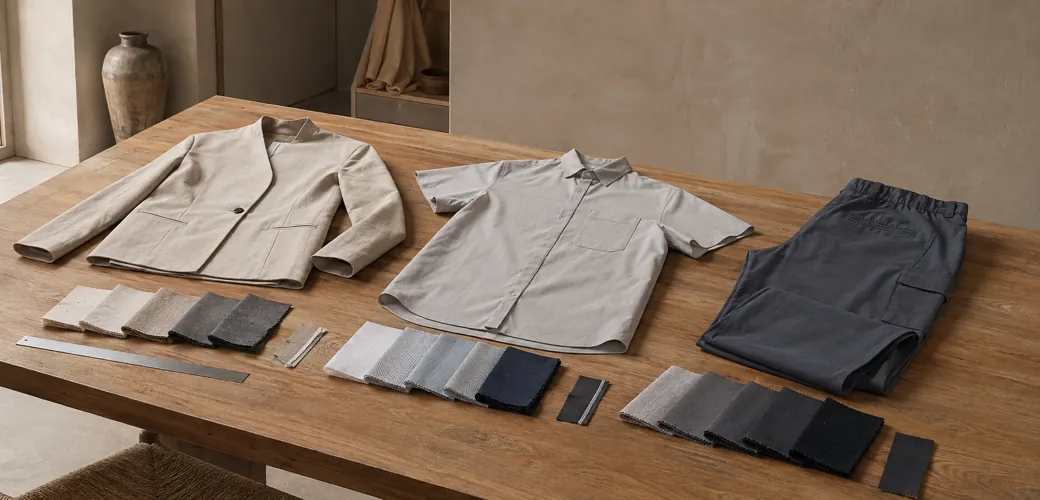
Hotel uniform fabric guide
A role-led guide for turning hotel laundry, climate, movement and appearance needs into a fabric brief suppliers can answer with evidence.
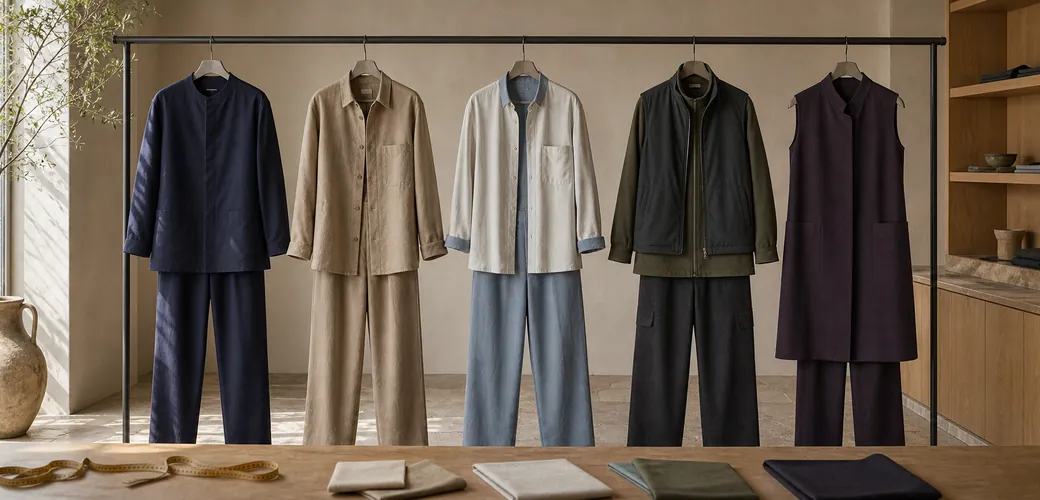
Hotel uniform design ideas that work
Five visual directions for hotel uniforms, each tested against real roles, climate, movement, care and continuity before it reaches the shortlist.
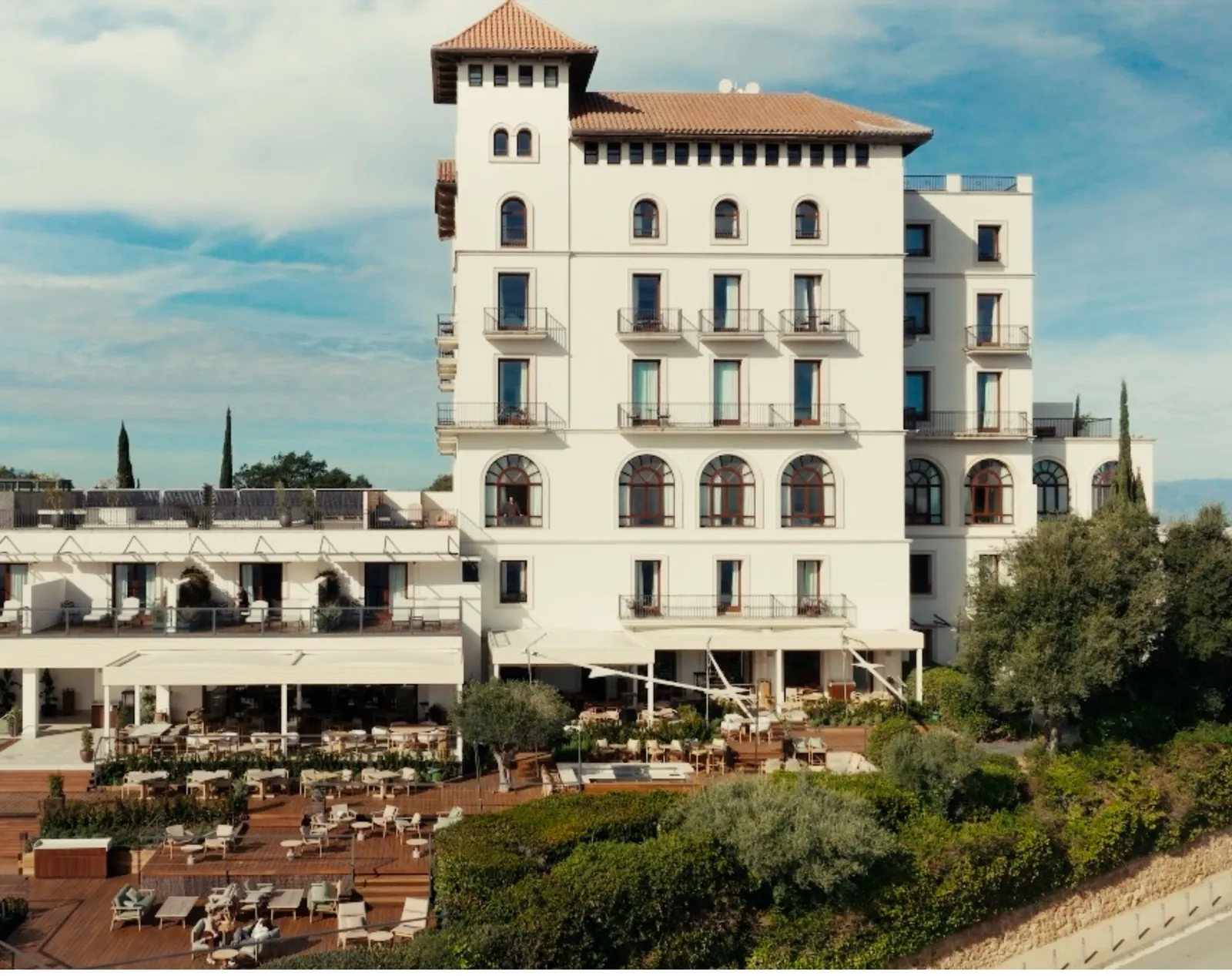
Custom hotel uniforms: design & durability
Discover how we designed bespoke uniforms for a five-star hotel in Barcelona, in line with the interior concept, using durable fabrics built for daily service.
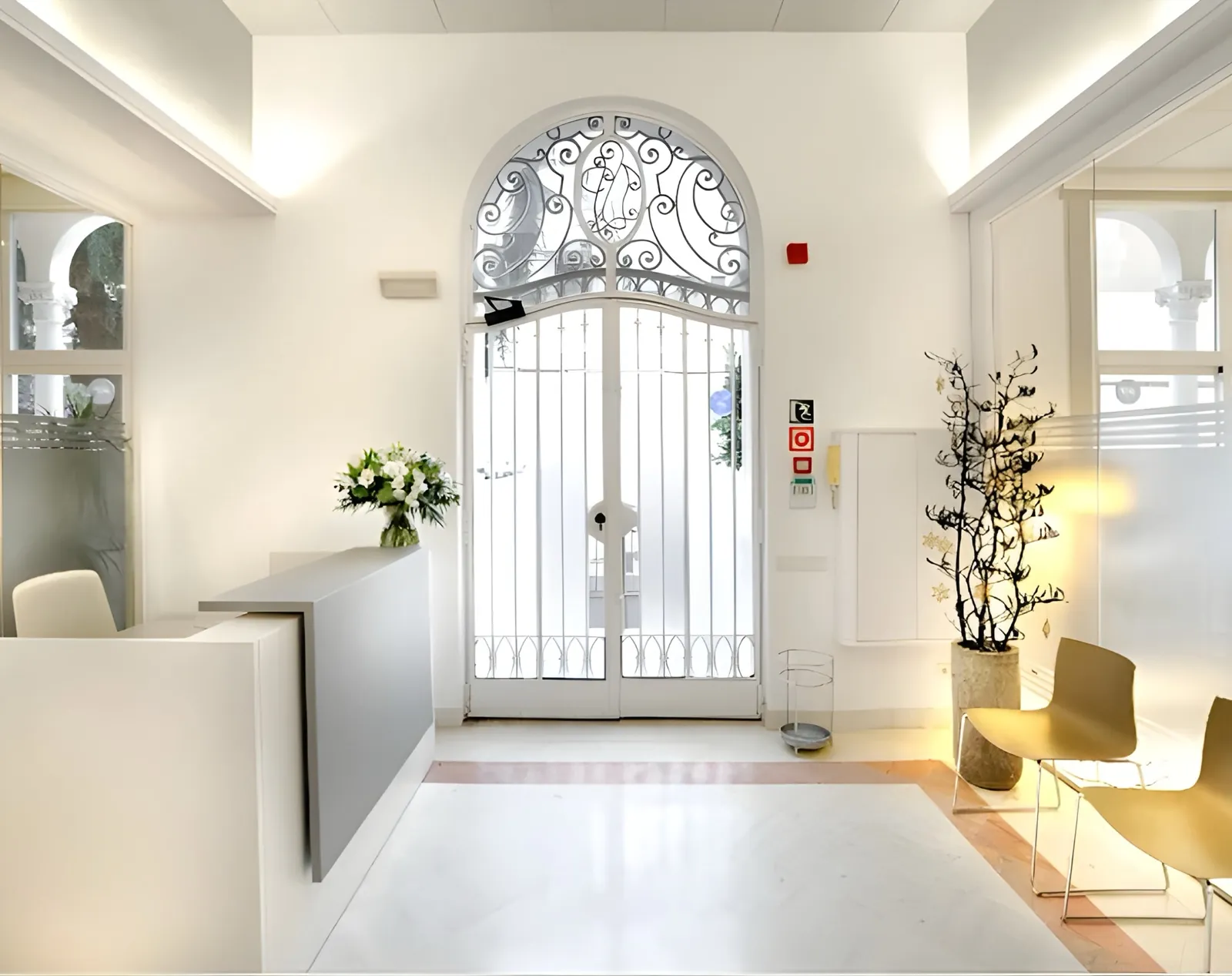
Custom uniforms for dental clinics
A case study on how a premium dental clinic in Barcelona used custom uniforms to bring together space, brand image, and everyday use.
Uniforms for wellness studios
How to build a uniform system for wellness studio teams by aligning space, comfort, daily service, and fabric durability.